

Description
What is Epithalon?
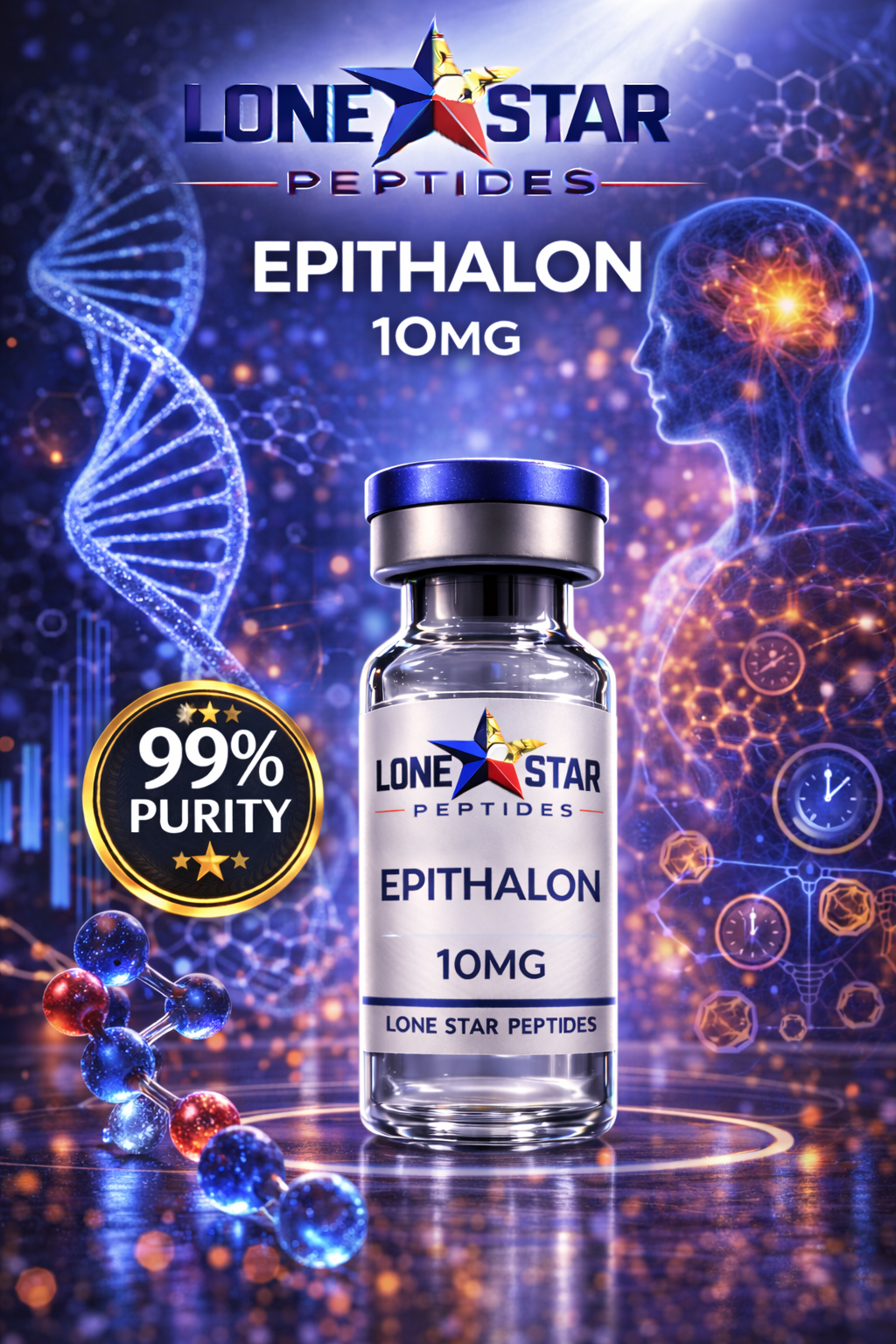
Epithalon (also spelled Epitalon; sequence Ala‑Glu‑Asp‑Gly or AEDG) is a synthetic tetrapeptide developed in the 1990s at the St. Petersburg Institute of Bioregulation and Gerontology under Professor Vladimir Khavinson. It is the short synthetic analog of Epithalamin, a bovine‑pineal‑extract bioregulator. It is the most extensively studied of the Khavinson “peptide bioregulators” and has a substantial Russian‑language literature on geroprotective, telomerase‑activating, and circadian effects.
Mechanism of Action
- Proposed telomerase activation in somatic cells and extension of population doublings in human fibroblast culture (Khavinson et al. in vitro data)
- Restoration of circadian melatonin secretion in aged animals
- Epigenetic modulation: proposed allosteric interaction with DNA in promoter regions
- Antioxidant and anti‑tumor effects in rodent models (reduced spontaneous tumor incidence in aged rats per Anisimov data)
Compound Properties
- Molecular formula: C14H22N4O9
- Molecular weight: ~390.35 g/mol
- CAS: 307297‑39‑8
- Sequence: Ala‑Glu‑Asp‑Gly (AEDG)
- Form: Lyophilized powder
- Unit size: Varies by vial — please confirm unit size at purchase
- Source: Solid‑phase peptide synthesis; ≥98% purity by HPLC
Research‑Reference Dosing
Published research‑reference ranges (largely Russian‑language):
- Khavinson et al., Bulletin of Experimental Biology and Medicine (2003): telomerase activity in human fetal fibroblasts and cell‑doubling extension.
- Anisimov et al., Neuroendocrinology Letters, Experimental Gerontology (2000s): lifespan extension and reduced tumor incidence in rats and mice.
- Korkushko et al.: clinical pilot studies in elderly Russian cohorts evaluating mortality and cardiovascular endpoints.
- Rigorous Western‑journal replication and Phase 3 human trials are limited or absent.
Research Findings
- Telomerase activation and extended fibroblast population doublings in vitro (Khavinson 2003)
- Lifespan extension and reduced spontaneous tumor incidence in aged rodents (Anisimov)
- Restoration of pineal melatonin rhythm in aged monkeys and humans
- Evidence base is Russian‑dominated; large‑scale Western replication is limited
Known Side Effects Reported in Research/Trials
- Generally well tolerated in published cohorts
- Rare injection‑site reactions
- Transient sleep changes (vivid dreams, altered sleep onset) reported anecdotally
- Long‑term safety data outside Russian registries is limited
Storage & Handling
- Lyophilized (unreconstituted) vials: store at −20°C long‑term; short‑term 2–8°C acceptable.
- After reconstitution with bacteriostatic or sterile water: store at 2–8°C; use within 14–28 days per standard peptide stability guidance.
- Protect from light, heat, and repeated freeze‑thaw cycles. Handle in a sterile laboratory environment.
Certificate of Analysis
A Certificate of Analysis (COA) confirming identity and purity by HPLC / MS is available upon request. Contact Lonestar Peptides for lot‑specific documentation.
Summaries reference peer‑reviewed preclinical and clinical literature available as of early 2025. Newer findings may not be reflected. Researchers should consult current literature and conduct their own due diligence. Lonestar Peptides makes no claim of therapeutic benefit.