

Description
What is GLOW?
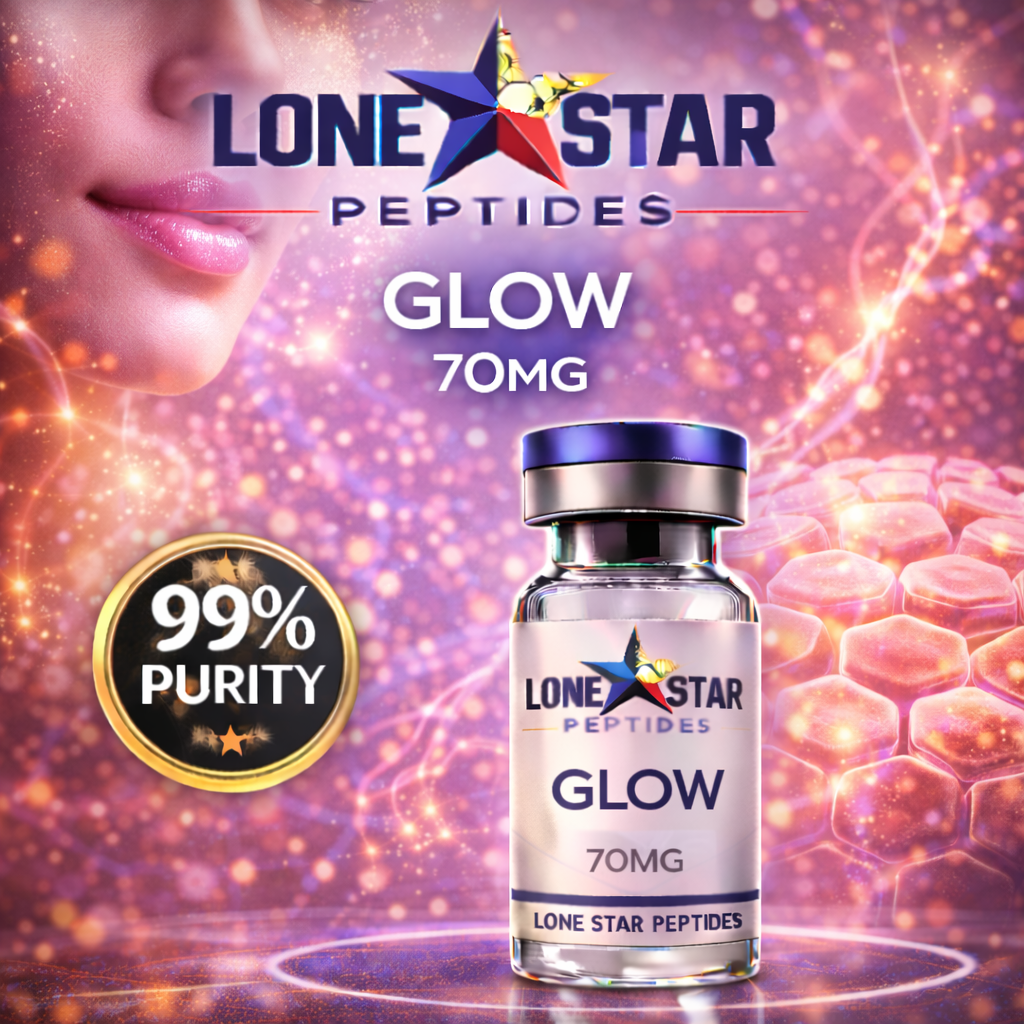
GLOW is a co‑lyophilized three‑peptide research blend combining GHK‑Cu (copper tripeptide‑1), BPC‑157 (body protection compound), and TB‑500 (Thymosin β4 17‑aa fragment). The intended use is preclinical research into skin, hair, and connective‑tissue biology, leveraging the complementary mechanisms of copper‑peptide fibroblast stimulation, VEGF/eNOS‑driven angiogenesis, and actin‑cytoskeleton modulation.
Mechanism of Action — Combined
- GHK‑Cu: Copper delivery; stimulates collagen, elastin, glycosaminoglycan synthesis; hair follicle dermal papilla activation; broad gene‑expression modulation.
- BPC‑157: VEGF‑R2/eNOS upregulation; angiogenesis; wound‑bed granulation; gut barrier and connective tissue support.
- TB‑500: G‑actin sequestration; cell migration; laminin‑5 upregulation.
- Combination rationale: three distinct, complementary arms of dermal and soft‑tissue regeneration — matrix synthesis, vascular ingrowth, and cytoskeletal remodeling.
Compound Properties
- Composition: GHK‑Cu + BPC‑157 + TB‑500 (typical ratio ~50:10:10 mg; confirm per vial at purchase)
- Total peptide mass: 70 mg / vial
- Form: Lyophilized powder (blue/violet tint from Cu coordination)
- Source: Each constituent ≥98% purity by HPLC prior to blending
Research‑Reference Dosing
Published research‑reference ranges (for each constituent; no published head‑to‑head blend pharmacology):
- Pickart et al., Experimental Gerontology (2012, 2015): GHK‑Cu in skin and systemic research.
- Sikiric et al., Current Pharmaceutical Design (2010): BPC‑157 in gut and musculoskeletal models.
- Malinda et al., Journal of Investigative Dermatology (1999); Bock‑Marquette, Nature (2004): Tβ4/TB‑500 in wound and cardiac models.
- No published clinical trial data exists for this specific three‑peptide blend.
Research Findings
- Each constituent has independent preclinical dermal/wound‑healing evidence
- Blend‑specific PK and synergy have not been formally characterized in peer‑reviewed literature
- Popular preclinical research protocol for integrated skin/hair/soft‑tissue regeneration studies
Known Side Effects Reported in Research/Trials
- Injection‑site erythema or mild burning sensation (Cu‑peptide characteristic)
- Blue/green solution color from copper coordination is normal
- Theoretical copper overload with prolonged high‑dose use
- Theoretical pro‑angiogenic caution in occult neoplasia (TB‑500/BPC‑157)
- Long‑term human safety data unavailable for any constituent
Storage & Handling
- Lyophilized (unreconstituted) vials: store at −20°C long‑term; short‑term 2–8°C acceptable.
- After reconstitution with bacteriostatic or sterile water: store at 2–8°C; use within 14–28 days per standard peptide stability guidance.
- Protect from light, heat, and repeated freeze‑thaw cycles. Handle in a sterile laboratory environment.
Certificate of Analysis
A Certificate of Analysis (COA) confirming identity and purity by HPLC / MS is available upon request. Contact Lonestar Peptides for lot‑specific documentation.
Summaries reference peer‑reviewed preclinical and clinical literature available as of early 2025. Newer findings may not be reflected. Researchers should consult current literature and conduct their own due diligence. Lonestar Peptides makes no claim of therapeutic benefit.