

Description
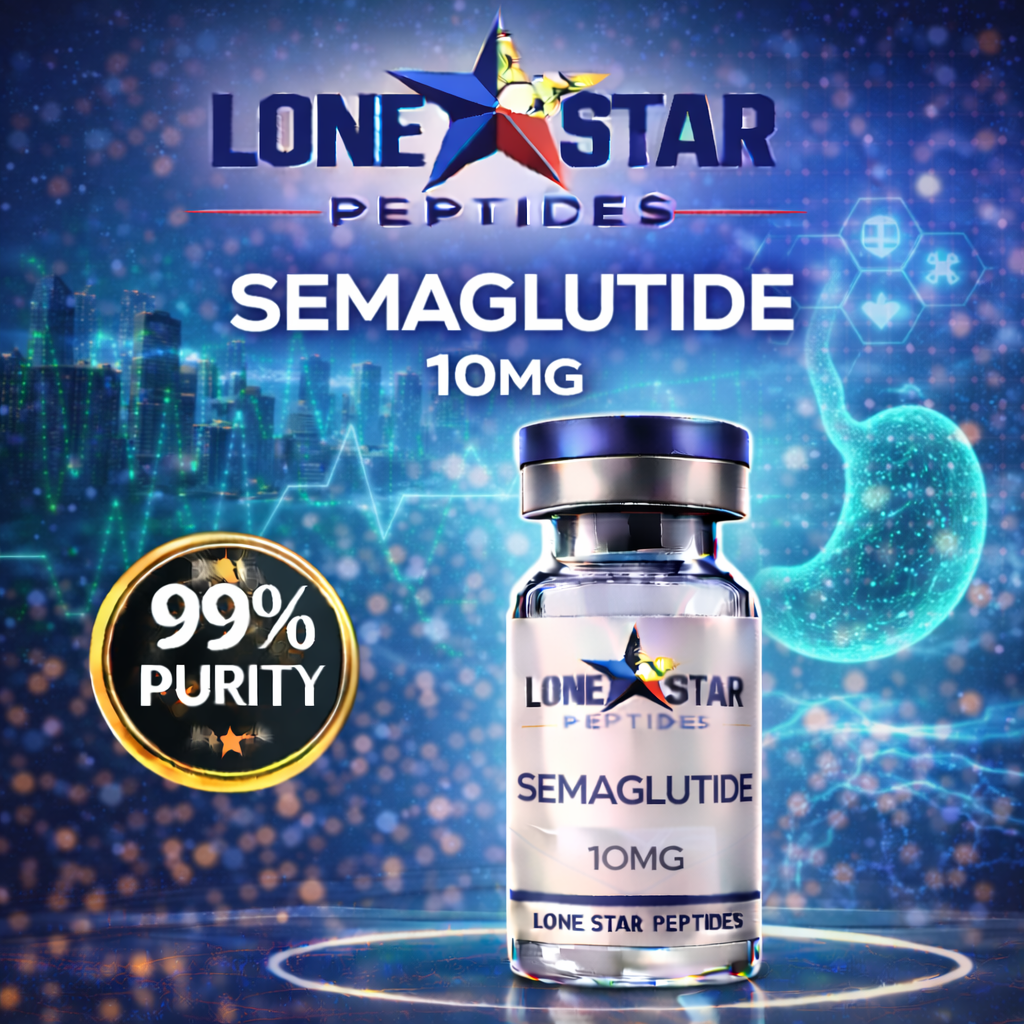
What is Semaglutide?
Semaglutide is a 31–amino acid synthetic glucagon-like peptide-1 (GLP-1) receptor agonist with modifications (Aib substitution and a C18 fatty-acid side chain) that extend its half-life to approximately 165 hours, enabling once-weekly dosing. It is one of the most extensively studied incretin compounds, with large human clinical trial programs (SUSTAIN, PIONEER, STEP, SELECT) evaluating its effects on glycemia, body weight, and cardiovascular outcomes.
Mechanism of Action
- GLP-1 receptor agonism enhancing glucose-dependent insulin secretion and suppressing glucagon
- Slowed gastric emptying, increasing satiety
- Central appetite regulation via hypothalamic and brainstem GLP-1 pathways
Compound Properties
- Molecular formula: C187H291N45O59
- Molecular weight: ~4,113.6 g/mol
- CAS number: 910463-68-2
- Form: Lyophilized powder
- Unit sizes: 5 mg and 10 mg vials
- Source reference: PubChem CID 56843331
Research-Reference Dosing
Human clinical trial dosing from published peer-reviewed studies. Provided for research reference only.
- SUSTAIN trials (T2D): 0.5 mg or 1.0 mg subcutaneous once weekly after titration (Marso et al., NEJM 2016)
- STEP-1 (obesity): 2.4 mg subcutaneous once weekly; titration over 16 weeks starting at 0.25 mg (Wilding et al., NEJM 2021)
- Standard titration schedule: 0.25 mg → 0.5 mg → 1.0 mg → 1.7 mg → 2.4 mg at 4-week intervals as tolerated
- SELECT (CV outcomes): 2.4 mg subcutaneous once weekly (Lincoff et al., NEJM 2023)
Research Findings (Published Human Data)
- STEP-1: ~14.9% mean body weight reduction over 68 weeks at 2.4 mg dose
- SUSTAIN-6: Significant reduction in major adverse cardiovascular events in T2D patients
- SELECT: 20% reduction in cardiovascular death, MI, or stroke in overweight/obese non-diabetic adults with CVD
- HbA1c reductions of 1.0–1.8% across SUSTAIN trials
Known Side Effects Reported in Trials
- Most common: nausea, vomiting, diarrhea, constipation, abdominal pain, decreased appetite
- Less common: injection-site reactions, fatigue, dizziness, gallbladder disease
- Serious/rare: pancreatitis, diabetic retinopathy complications (in pre-existing retinopathy), acute kidney injury from dehydration
- Boxed warning (FDA labeling): thyroid C-cell tumors in rodent studies; contraindicated in personal/family history of MTC or MEN 2
Storage & Handling
Store lyophilized vial at 2–8°C, protected from light. After reconstitution, refrigerate at 2–8°C and use within the stability window described in the relevant literature. Do not freeze reconstituted solution.
Certificate of Analysis
A product-specific Certificate of Analysis (CoA) is available upon request for every lot.