

Description
What is PE 22–28?
PE 22–28 is a truncated 7‑residue analog of Spadin (a 17‑amino‑acid peptide derived from the sortilin‑related propeptide, PE), optimized for TREK‑1 two‑pore‑domain potassium channel inhibition. In preclinical work from the Borsotto/Heurteaux lab (France), TREK‑1 inhibition produces a rapid, ketamine‑like antidepressant phenotype in rodents without the dissociative or addiction liability of NMDA antagonists.
Mechanism of Action
- Selective inhibitor of TREK‑1 two‑pore‑domain K+ channels
- TREK‑1 blockade enhances serotonergic neuron firing in dorsal raphe, rapidly elevating 5‑HT tone in limbic regions
- Does not act via SSRI, SNRI, or NMDA pathways
- Short plasma half‑life; BBB‑penetrant in rodent studies
Compound Properties
- Sequence: 7‑residue fragment (positions 22–28 of the parent PE peptide; specific sequence varies by supplier)
- Molecular weight: ~830 g/mol (approximate)
- Form: Lyophilized powder
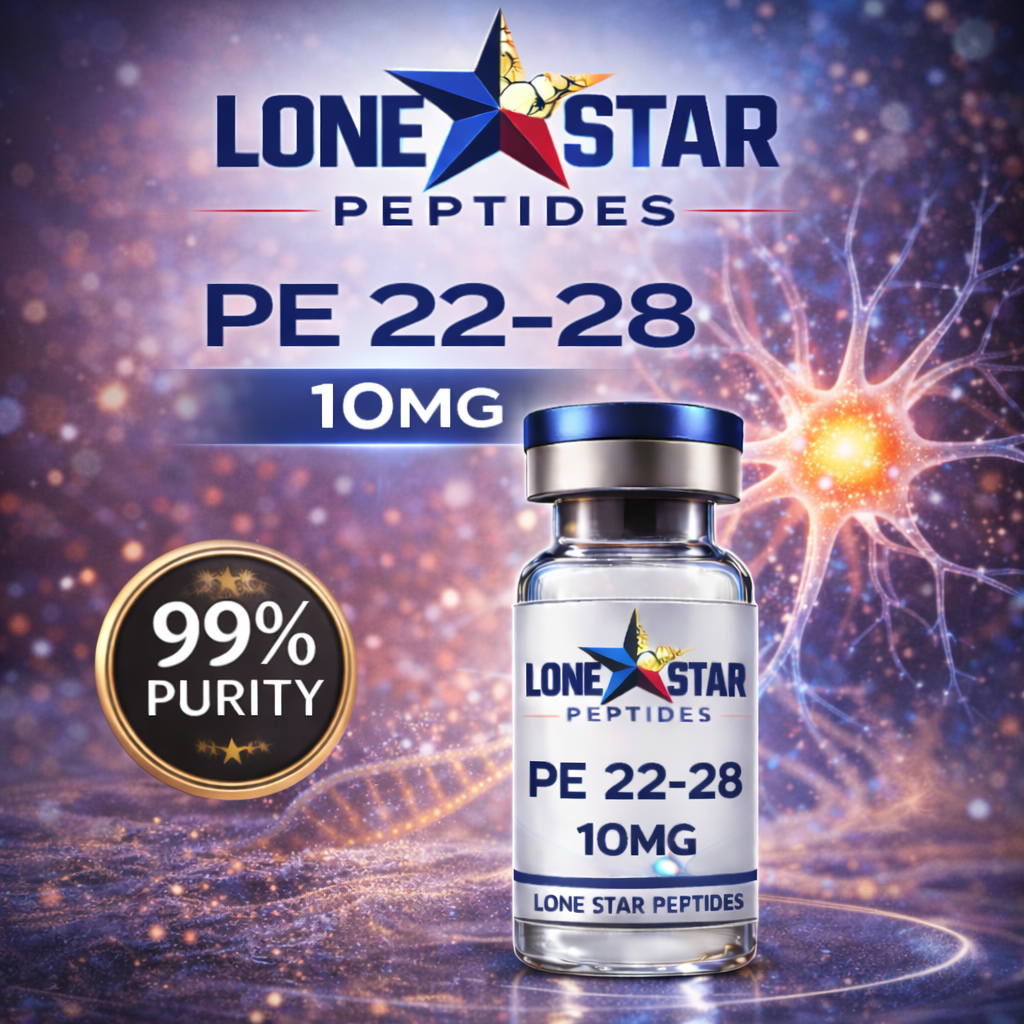
- Unit size: 10 mg / vial
- Source: Solid‑phase peptide synthesis; ≥98% purity by HPLC
Research‑Reference Dosing
Published research‑reference ranges in preclinical literature:
- Veyssiere et al., Behavioural Brain Research (2015): PE 22–28 exhibited antidepressant‑like activity in rodent forced‑swim and novelty‑suppressed‑feeding paradigms at IP doses of ~100 µg/kg.
- Moha Ou Maati et al., PLoS ONE (2012): Spadin TREK‑1 characterization (parent compound).
- No published human clinical trial data is available.
Research Findings
- Rapid‑onset antidepressant‑like activity in rodent behavioral paradigms (Veyssiere 2015)
- Increased hippocampal neurogenesis with repeated dosing
- No classical SSRI‑associated sexual or sleep side effects in preclinical profile
- Has not progressed to formal clinical development
Known Side Effects Reported in Research/Trials
- Generally well tolerated in short‑term rodent studies
- No human safety data in peer‑reviewed literature
- Theoretical concern: TREK‑1 is expressed in cardiac and GI tissue; cardiovascular or GI off‑target effects have not been extensively profiled
- Long‑term human safety is uncharacterized
Storage & Handling
- Lyophilized (unreconstituted) vials: store at −20°C long‑term; short‑term 2–8°C acceptable.
- After reconstitution with bacteriostatic or sterile water: store at 2–8°C; use within 14–28 days per standard peptide stability guidance.
- Protect from light, heat, and repeated freeze‑thaw cycles. Handle in a sterile laboratory environment.
Certificate of Analysis
A Certificate of Analysis (COA) confirming identity and purity by HPLC / MS is available upon request. Contact Lonestar Peptides for lot‑specific documentation.
Summaries reference peer‑reviewed preclinical and clinical literature available as of early 2025. Newer findings may not be reflected. Researchers should consult current literature and conduct their own due diligence. Lonestar Peptides makes no claim of therapeutic benefit.