

Description
What is BPC‑157 Arginate Salt?
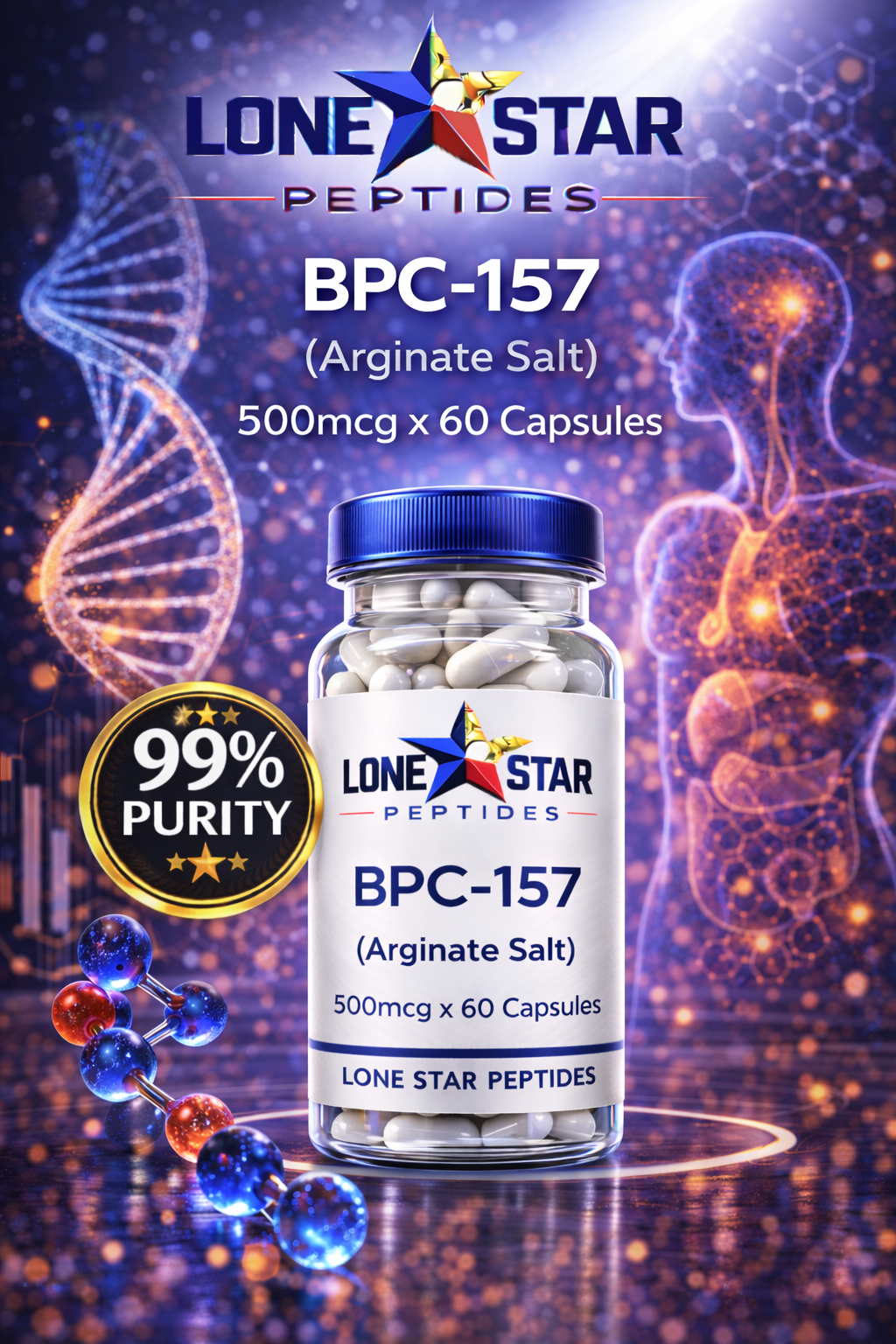
BPC‑157 arginate salt is the arginine‑counter‑ion form of the peptide BPC‑157 (typically supplied as the acetate salt in injectable preparations). The arginate form has been reported in supplier literature to offer improved gastric‑acid stability, solubility, and potentially enhanced oral absorption. Published comparative pharmacokinetic data on the two salt forms is limited.
Mechanism of Action
- The active sequence is identical to standard BPC‑157: a 15‑amino‑acid partial sequence of a gastric protective protein
- Upregulates VEGF‑R2 and eNOS — drives angiogenesis and NO‑mediated cytoprotection
- Stabilizes gut barrier, modulates gut‑brain axis signaling, and accelerates granulation in preclinical wound models
- Arginine counter‑ion may contribute modestly to NO substrate availability
Compound Properties
- Active sequence: GEPPPGKPADDAGLV (BPC‑157)
- Salt form: Arginate (arginine counter‑ion)
- Molecular weight (peptide): ~1419.5 g/mol
- Form: Oral capsule
- Unit size: 500 µg per capsule × 60 capsules
- Source: Solid‑phase peptide synthesis; ≥98% purity by HPLC
Research‑Reference Dosing
Published research‑reference ranges:
- Sikiric et al., Current Pharmaceutical Design (2010); Journal of Physiology – Paris (2010): oral and intragastric BPC‑157 in rodent gut and musculoskeletal models.
- Chang et al., Tohoku Journal of Experimental Medicine (2011): oral BPC‑157 and tendon healing.
- The arginate salt form specifically has not been formally evaluated in peer‑reviewed pharmacokinetic comparisons; most published work uses acetate salt.
Research Findings
- Accelerated tendon, muscle, and gut healing in rodent models (Sikiric 2010)
- Protection against NSAID‑ and alcohol‑induced gastric lesions (preclinical)
- Arginate salt is a supplier‑differentiated formulation; comparative clinical pharmacology is not published
Known Side Effects Reported in Research/Trials
- Generally well tolerated in preclinical rodent studies
- Rare reports of mild GI upset with oral capsules
- Theoretical pro‑angiogenic caution in occult neoplasia
- Long‑term human safety data unavailable
Storage & Handling
- Lyophilized (unreconstituted) vials: store at −20°C long‑term; short‑term 2–8°C acceptable.
- After reconstitution with bacteriostatic or sterile water: store at 2–8°C; use within 14–28 days per standard peptide stability guidance.
- Protect from light, heat, and repeated freeze‑thaw cycles. Handle in a sterile laboratory environment.
Certificate of Analysis
A Certificate of Analysis (COA) confirming identity and purity by HPLC / MS is available upon request. Contact Lonestar Peptides for lot‑specific documentation.
Summaries reference peer‑reviewed preclinical and clinical literature available as of early 2025. Newer findings may not be reflected. Researchers should consult current literature and conduct their own due diligence. Lonestar Peptides makes no claim of therapeutic benefit.