

Description
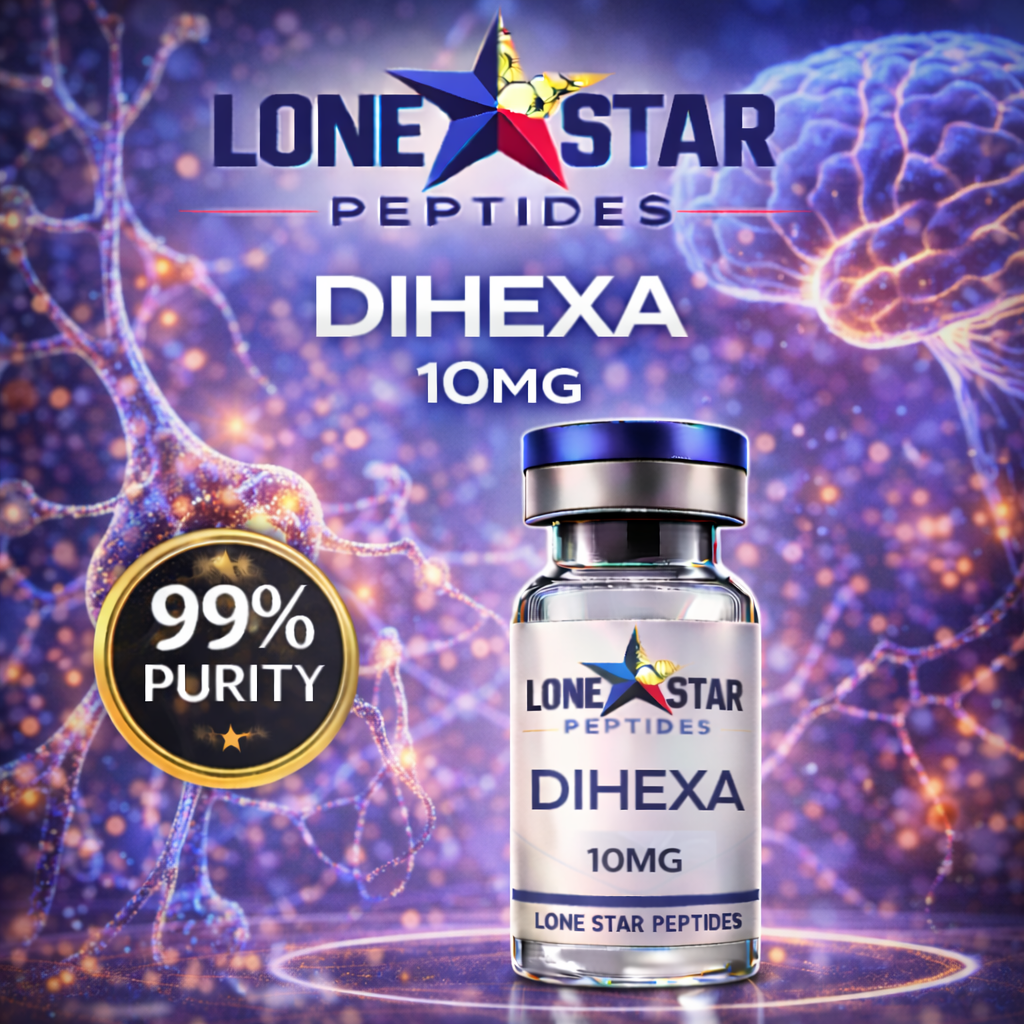
What is Dihexa?
Dihexa (also called PNB‑0408 or N‑hexanoic‑Tyr‑Ile‑(6) aminohexanoic amide) is a small‑molecule angiotensin‑IV analog developed in the laboratory of Joe Harding at Washington State University. It was engineered for BBB penetration and oral stability, and reports in the preclinical literature indicate potent pro‑cognitive and synaptogenic activity via the hepatocyte growth factor (HGF)/c‑Met pathway.
Mechanism of Action
- Binds and potentiates HGF/c‑Met receptor signaling in hippocampal neurons
- Promotes dendritic spinogenesis and synaptogenesis in rodent hippocampus
- Reportedly ~7 orders of magnitude more potent than BDNF in dendritic‑spine assays (per developer publications)
- Small lipophilic molecule with reported oral bioavailability and blood‑brain‑barrier penetration
Compound Properties
- Molecular formula: C27H44N4O5
- Molecular weight: ~504.67 g/mol
- Structure: N‑hexanoic‑Tyr‑Ile‑(6) aminohexanoic amide (peptidomimetic)
- Form: Powder (research preparation)
- Unit size: 10 mg / vial
- Source: Chemical synthesis; ≥98% purity by HPLC
Research‑Reference Dosing
Published research‑reference ranges in preclinical literature:
- Benoist et al., Journal of Pharmacology and Experimental Therapeutics (2011): Dihexa reversed scopolamine‑induced memory deficits in rats at oral doses of 0.25–2 mg/kg.
- Wright et al., Journal of Neurochemistry (2008, 2013): HGF/c‑Met pathway characterization and spinogenesis assays.
- No published human clinical trial data is available.
Research Findings
- Pro‑cognitive activity in scopolamine and age‑related rodent memory models (Benoist 2011)
- Dendritic spinogenesis in hippocampal neuronal cultures (Wright 2013)
- Proposed candidate for Alzheimer disease; has not progressed through formal clinical development
Known Side Effects Reported in Research/Trials
- Generally well tolerated in short‑term rodent studies
- No human safety or tolerability data exists in peer‑reviewed literature
- Theoretical concern: broad HGF/c‑Met activation has been implicated in oncogenesis in other contexts; long‑term oncologic safety has not been characterized
- Blood‑brain‑barrier‑penetrant small molecule — unknown CNS adverse‑event profile in humans
Storage & Handling
- Lyophilized (unreconstituted) vials: store at −20°C long‑term; short‑term 2–8°C acceptable.
- After reconstitution with bacteriostatic or sterile water: store at 2–8°C; use within 14–28 days per standard peptide stability guidance.
- Protect from light, heat, and repeated freeze‑thaw cycles. Handle in a sterile laboratory environment.
Certificate of Analysis
A Certificate of Analysis (COA) confirming identity and purity by HPLC / MS is available upon request. Contact Lonestar Peptides for lot‑specific documentation.
Summaries reference peer‑reviewed preclinical and clinical literature available as of early 2025. Newer findings may not be reflected. Researchers should consult current literature and conduct their own due diligence. Lonestar Peptides makes no claim of therapeutic benefit.