

Description
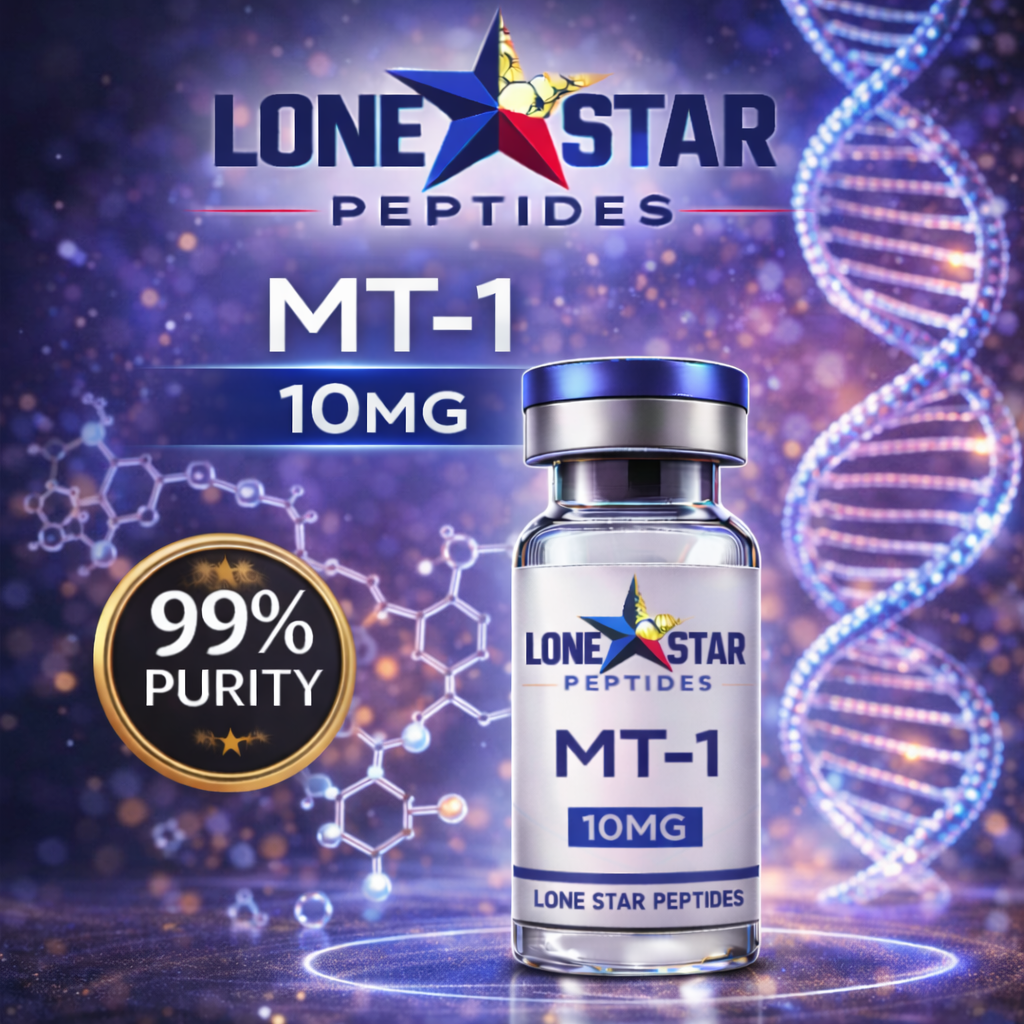
What is MT-1 (Afamelanotide)?
Melanotan‑1, also called NDP‑α‑MSH or afamelanotide (trade name Scenesse®, Clinuvel Pharmaceuticals), is a synthetic tridecapeptide analog of native α‑melanocyte‑stimulating hormone. Two amino‑acid substitutions (Nle at position 4 and D‑Phe at position 7) confer proteolytic stability and markedly higher potency and duration than native α‑MSH. It is the only melanocortin‑receptor agonist with a formal FDA approval (for erythropoietic protoporphyria).
Mechanism of Action
- Potent agonist at MC1R on cutaneous melanocytes → eumelanin synthesis
- Activity at MC3R and MC4R contributes to systemic effects including mild appetite suppression
- Sustained cutaneous pigmentation providing photoprotection against UVR‑induced oxidative stress
- Commercial implant (Scenesse®) delivers ~16 mg SC bioresorbable implant at ~2‑month intervals
Compound Properties
- Molecular formula: C78H111N21O19
- Molecular weight: ~1646.85 g/mol
- CAS: 75921‑69‑6
- Sequence: Ac‑Ser‑Tyr‑Ser‑Nle‑Glu‑His‑D‑Phe‑Arg‑Trp‑Gly‑Lys‑Pro‑Val‑NH₂
- Form: Lyophilized powder
- Unit size: 10 mg / vial
- Source: Solid‑phase peptide synthesis; ≥98% purity by HPLC
Research‑Reference Dosing
Published research‑reference ranges from clinical trials of the commercial product:
- Langendonk et al., New England Journal of Medicine (2015): afamelanotide in erythropoietic protoporphyria (16 mg SC implants every 60 days).
- Minder et al., JAAD (2022): long‑term EPP data.
- Kim et al., JAMA Dermatology (2017): afamelanotide in vitiligo combination therapy.
Research Findings
- Sustained photoprotective eumelanin production in EPP patients, extending pain‑free sun exposure (Langendonk 2015)
- Improved repigmentation when combined with NB‑UVB in vitiligo (Kim 2017)
- Marketed globally for EPP under Scenesse®
Known Side Effects Reported in Research/Trials
- Generalized skin darkening, including pre‑existing moles/nevi (monitor for dysplastic change)
- Injection‑site reactions; implant‑site pain
- Nausea, flushing, headache, fatigue (transient)
- Appetite suppression (MC4R‑mediated)
- Theoretical oncologic concern: MC1R activation and melanocyte stimulation warrant careful dermatologic surveillance
Storage & Handling
- Lyophilized (unreconstituted) vials: store at −20°C long‑term; short‑term 2–8°C acceptable.
- After reconstitution with bacteriostatic or sterile water: store at 2–8°C; use within 14–28 days per standard peptide stability guidance.
- Protect from light, heat, and repeated freeze‑thaw cycles. Handle in a sterile laboratory environment.
Certificate of Analysis
A Certificate of Analysis (COA) confirming identity and purity by HPLC / MS is available upon request. Contact Lonestar Peptides for lot‑specific documentation.
Summaries reference peer‑reviewed preclinical and clinical literature available as of early 2025. Newer findings may not be reflected. Researchers should consult current literature and conduct their own due diligence. Lonestar Peptides makes no claim of therapeutic benefit.