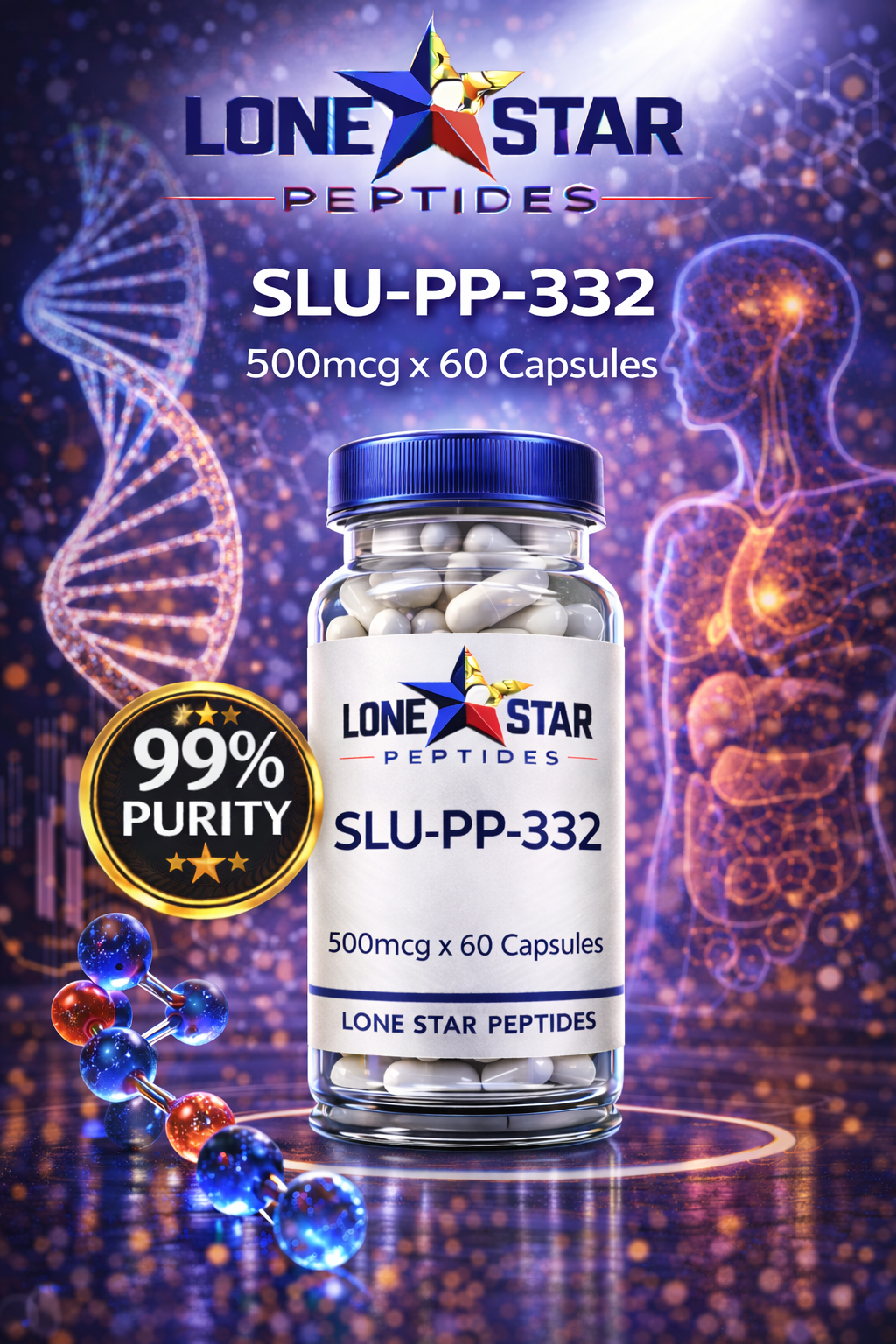



Description
What is DSIP?
DSIP (Delta Sleep‑Inducing Peptide) is an endogenous nonapeptide (Trp‑Ala‑Gly‑Gly‑Asp‑Ala‑Ser‑Gly‑Glu) first isolated by Monnier and Schoenenberger in 1977 from the venous blood of rabbits whose mesencephalic thalamus had been electrically stimulated to induce delta‑wave sleep. Despite its name, modern research shows DSIP is more accurately a stress‑modulating neuropeptide with complex, dose‑dependent effects on sleep architecture.
Mechanism of Action
- Proposed modulation of corticotropin‑releasing factor (CRF) and hypothalamic‑pituitary‑adrenal axis activity
- Attenuates ACTH and cortisol responses to stressors in preclinical models
- May influence sleep architecture (increased delta‑wave activity) though effects are inconsistent across studies
- Reported analgesic and anti‑withdrawal activity in rodent opioid‑dependence models
Compound Properties
- Molecular formula: C35H48N10O15
- Molecular weight: ~848.81 g/mol
- CAS: 62568‑57‑4
- Sequence: Trp‑Ala‑Gly‑Gly‑Asp‑Ala‑Ser‑Gly‑Glu
- Form: Lyophilized powder
- Unit size: 10 mg / vial
- Source: Solid‑phase peptide synthesis; ≥98% purity by HPLC
Research‑Reference Dosing
Published research‑reference ranges:
- Monnier & Schoenenberger, Experientia (1977): original isolation and sleep‑induction characterization.
- Schneider‑Helmert & Schoenenberger, Neuropsychobiology (1983): DSIP infusion in chronic insomnia patients.
- Kovalzon & Strekalova, Neuroscience and Biobehavioral Reviews (2006): critical review concluding DSIP’s sleep‑specific role is not firmly established.
- Human efficacy data is sparse and methodologically inconsistent.
Research Findings
- Original work showed transfer of delta‑sleep‑inducing activity across the blood‑brain barrier (Monnier 1977)
- Clinical studies in insomnia have produced mixed results (Schneider‑Helmert 1983)
- Modern reviews question DSIP’s role as a direct sleep regulator and emphasize stress‑axis modulation (Kovalzon 2006)
Known Side Effects Reported in Research/Trials
- Generally well tolerated in short‑term preclinical and clinical studies
- Rare reports of vivid dreams, morning grogginess, or headache
- No consistent adverse‑event pattern established
- Long‑term human safety data unavailable
Storage & Handling
- Lyophilized (unreconstituted) vials: store at −20°C long‑term; short‑term 2–8°C acceptable.
- After reconstitution with bacteriostatic or sterile water: store at 2–8°C; use within 14–28 days per standard peptide stability guidance.
- Protect from light, heat, and repeated freeze‑thaw cycles. Handle in a sterile laboratory environment.
Certificate of Analysis
A Certificate of Analysis (COA) confirming identity and purity by HPLC / MS is available upon request. Contact Lonestar Peptides for lot‑specific documentation.
Summaries reference peer‑reviewed preclinical and clinical literature available as of early 2025. Newer findings may not be reflected. Researchers should consult current literature and conduct their own due diligence. Lonestar Peptides makes no claim of therapeutic benefit.