

Description
What is Vitamin B12?
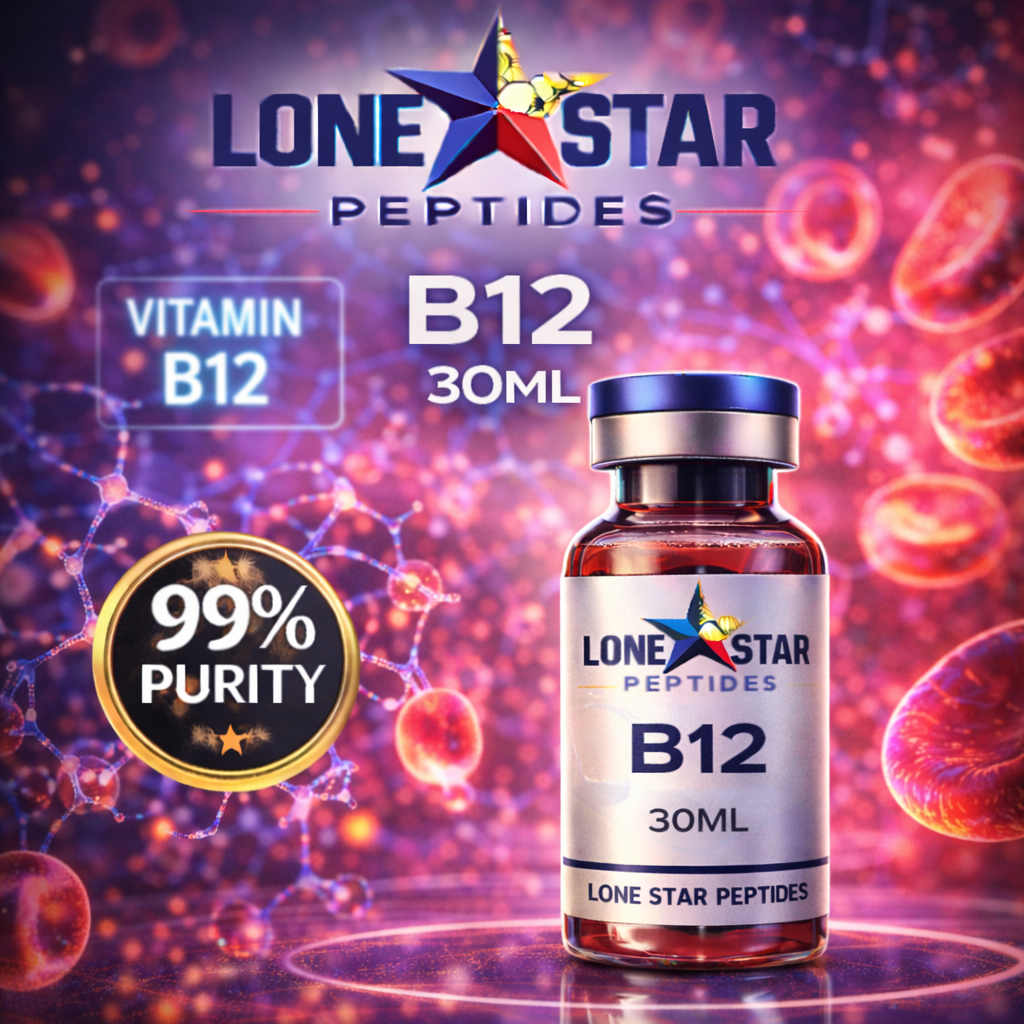
Vitamin B12 (cobalamin) is a water‑soluble cobalt‑containing corrinoid vitamin essential for DNA synthesis, methylation reactions, and neurologic function. Injectable preparations typically use either methylcobalamin (the methyl‑coenzyme form) or hydroxocobalamin (stable precursor). It is not a peptide, but is commonly stocked alongside peptide research preparations as an ancillary biologic.
Mechanism of Action
- Coenzyme for methionine synthase: converts homocysteine + 5‑methyl‑THF → methionine + THF (methylation cycle)
- Coenzyme for methylmalonyl‑CoA mutase in odd‑chain fatty acid and branched‑chain amino acid catabolism
- Deficiency produces megaloblastic anemia and subacute combined degeneration of the spinal cord
- Absorption requires intrinsic factor in the terminal ileum; parenteral dosing bypasses this requirement
Compound Properties
- Molecular formula (methylcobalamin): C63H91CoN13O14P
- Molecular weight: ~1344.4 g/mol
- CAS (methylcobalamin): 13422‑55‑4
- Form: Liquid preparation (typically methylcobalamin or hydroxocobalamin)
- Unit size: 30 mL multi‑dose (typical research doses 2.5–5 mg per unit)
- Source: Fermentation‑derived; ≥98% purity by HPLC
Research‑Reference Context
Published clinical literature on the cobalamin class:
- Stabler et al., Blood (1990); Annual Review of Nutrition (2013): B12 metabolism and deficiency states.
- Butler et al., JAMA (2006): B12 replacement trials.
- Parenteral B12 is standard of care for pernicious anemia (autoimmune intrinsic‑factor deficiency) and for neurologic B12 deficiency presentations.
Research Findings
- Reliable reversal of megaloblastic anemia and neurologic deficiency symptoms
- Normalization of methylmalonic acid and homocysteine levels
- Injectable route bypasses GI absorption limitations
Known Side Effects Reported in Research/Trials
- Injection‑site reactions, mild transient pain
- Rare hypokalemia early in severe‑deficiency treatment (shift into newly produced cells)
- Very rare hypersensitivity reactions
- Cobalamin is generally considered among the safest injectable biologics
Storage & Handling
- Lyophilized (unreconstituted) vials: store at −20°C long‑term; short‑term 2–8°C acceptable.
- After reconstitution with bacteriostatic or sterile water: store at 2–8°C; use within 14–28 days per standard peptide stability guidance.
- Protect from light, heat, and repeated freeze‑thaw cycles. Handle in a sterile laboratory environment.
Certificate of Analysis
A Certificate of Analysis (COA) confirming identity and purity by HPLC / MS is available upon request. Contact Lonestar Peptides for lot‑specific documentation.
Summaries reference peer‑reviewed preclinical and clinical literature available as of early 2025. Newer findings may not be reflected. Researchers should consult current literature and conduct their own due diligence. Lonestar Peptides makes no claim of therapeutic benefit.