

Description
What is GHK‑Cu?
GHK‑Cu is a tripeptide–copper complex (Gly‑His‑Lys coordinated with Cu(II)), first isolated from human plasma by Loren Pickart in the 1970s. It has one of the richest publication records of any cosmeceutical peptide—with hundreds of papers spanning skin regeneration, hair follicle biology, antioxidant defense, and gene expression modulation.
Mechanism of Action
- High‑affinity copper chelator; delivers Cu(II) to enzymes requiring copper (lysyl oxidase, superoxide dismutase)
- Stimulates dermal fibroblast proliferation and synthesis of collagen, elastin, glycosaminoglycans, and decorin
- Reported to modulate expression of ~4,000 human genes (Pickart & Margolina 2015 genomic analysis)
- Stimulates hair follicle anagen transition in dermal‑papilla research
- Anti‑oxidant: attenuates lipid peroxidation in preclinical models
Compound Properties
- Molecular formula (peptide): C14H24N6O4
- Molecular weight (peptide): ~340.38 g/mol (~403 g/mol as Cu complex)
- CAS: 49557‑75‑7 (GHK‑Cu)
- Sequence: Gly‑His‑Lys (coordinated with Cu2+)
- Form: Lyophilized powder (blue/violet color characteristic of Cu coordination)
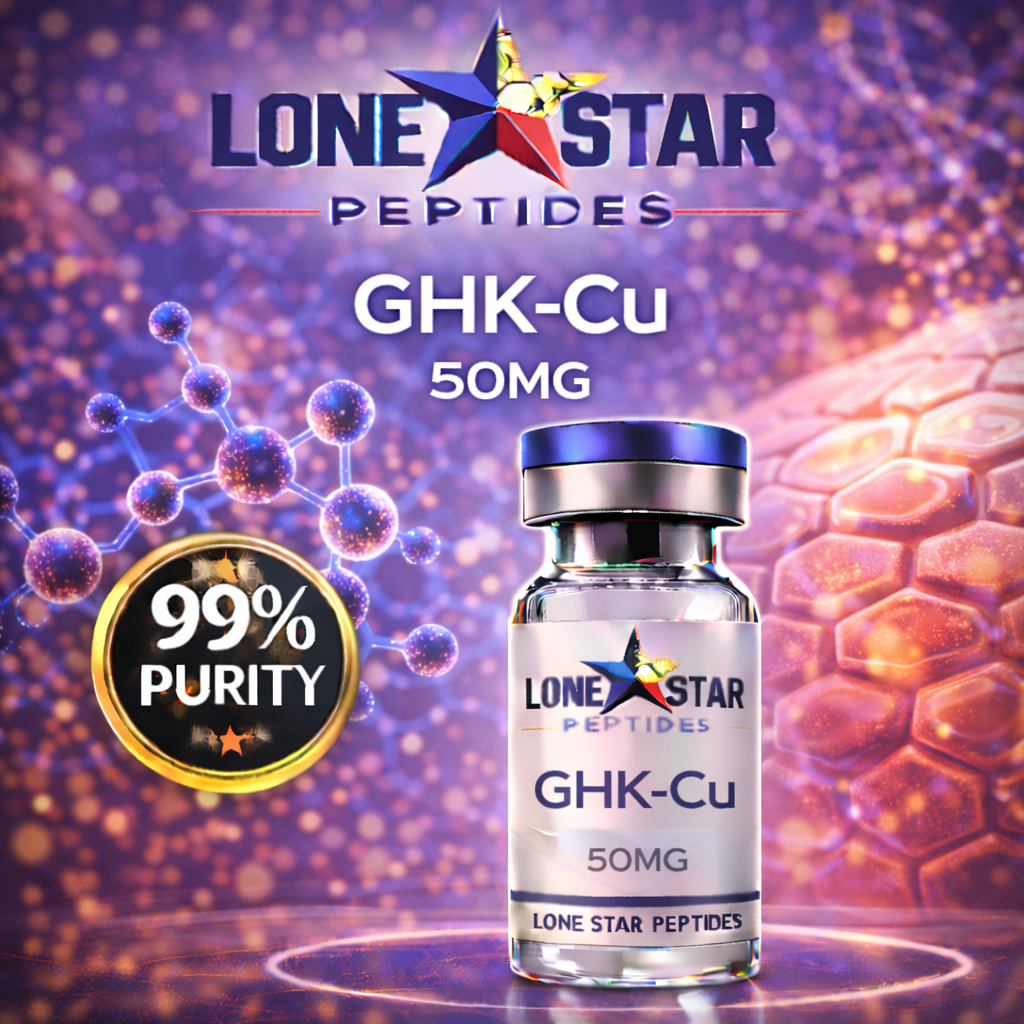
- Unit size: 50 mg / vial
- Source: Solid‑phase peptide synthesis with post‑synthesis copper coordination; ≥98% purity by HPLC
Research‑Reference Dosing
Published research‑reference ranges:
- Pickart et al., Experimental Gerontology (2012, 2015): foundational reviews of GHK‑Cu in skin, wound, and genomic effects.
- Maquart et al., FEBS Letters (1988): GHK‑Cu stimulation of glycosaminoglycan synthesis.
- Hong et al., International Journal of Molecular Sciences (2015): GHK‑Cu in hair follicle research.
- Most published clinical data involves topical (cosmetic) formulations; parenteral human PK data is limited.
Research Findings
- Stimulation of collagen, elastin, and GAG synthesis (Maquart 1988)
- Hair‑follicle anagen transition and dermal papilla effects (Hong 2015)
- Broad gene expression modulation including DNA‑repair, cancer‑suppressor, and anti‑inflammatory pathways in genomic screens (Pickart & Margolina 2015)
Known Side Effects Reported in Research/Trials
- Injection‑site erythema, warmth, or mild burning sensation (parenteral)
- Characteristic blue/green discoloration of solution is normal (Cu coordination)
- Theoretical concern: copper overload with prolonged high‑dose use; Wilson‑disease relevance
- Topical formulations generally very well tolerated; systemic human data limited
Storage & Handling
- Lyophilized (unreconstituted) vials: store at −20°C long‑term; short‑term 2–8°C acceptable.
- After reconstitution with bacteriostatic or sterile water: store at 2–8°C; use within 14–28 days per standard peptide stability guidance.
- Protect from light, heat, and repeated freeze‑thaw cycles. Handle in a sterile laboratory environment.
Certificate of Analysis
A Certificate of Analysis (COA) confirming identity and purity by HPLC / MS is available upon request. Contact Lonestar Peptides for lot‑specific documentation.
Summaries reference peer‑reviewed preclinical and clinical literature available as of early 2025. Newer findings may not be reflected. Researchers should consult current literature and conduct their own due diligence. Lonestar Peptides makes no claim of therapeutic benefit.