

Description
What is GHRP‑2?
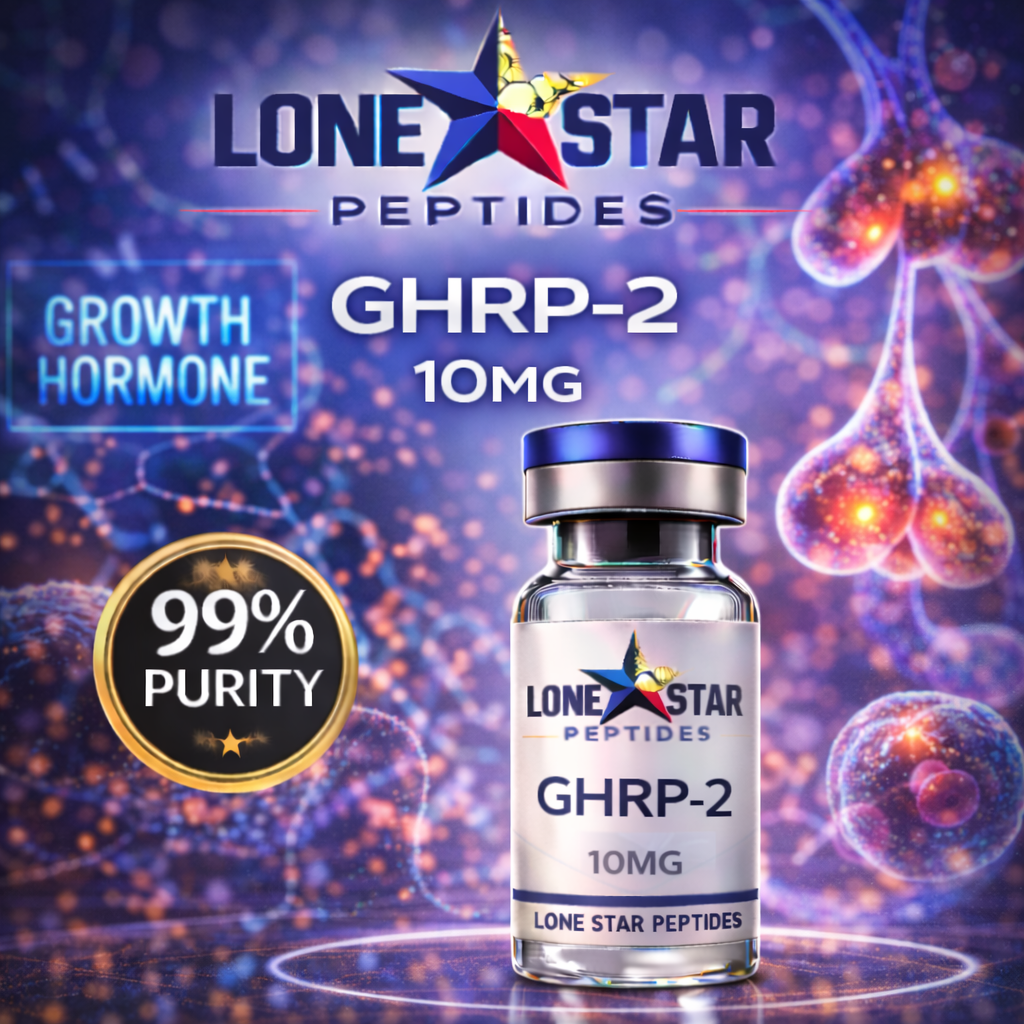
GHRP‑2 (also known as pralmorelin or KP‑102) is a second‑generation synthetic growth‑hormone‑releasing peptide. It is more potent than GHRP‑6 on a molar basis and has been used clinically in Japan as a diagnostic test (pralmorelin hydrochloride) to evaluate adult GH deficiency.
Mechanism of Action
- Agonist at the ghrelin receptor (GHS‑R1a) on pituitary somatotrophs and hypothalamic neurons
- Triggers robust pulsatile GH release; synergizes with GHRH (additive‑supra‑additive GH pulses in paired studies)
- Modest increase in appetite (ghrelin‑class effect) with mild cortisol/prolactin elevation reported at higher doses
Compound Properties
- Molecular formula: C45H55N9O6
- Molecular weight: ~817.97 g/mol
- CAS: 158861‑67‑7
- Sequence: D‑Ala‑D‑2‑Nal‑Ala‑Trp‑D‑Phe‑Lys‑NH₂
- Form: Lyophilized powder
- Unit size: 10 mg / vial
- Source: Solid‑phase peptide synthesis; ≥99% purity by HPLC
Research‑Reference Dosing
Published research‑reference ranges in clinical literature:
- Bowers et al., Endocrinology / JCEM (1990s): foundational GHRP‑2 characterization in humans; IV doses of 1 µg/kg produced reliable GH responses.
- Chihara et al., JCEM (2007): approval studies for pralmorelin as a diagnostic in Japanese adult GHD.
- Laferrère et al., JCEM (2005): GHRP‑2 effects on appetite in humans.
Research Findings
- Reliable diagnostic provocation of pituitary GH reserve (Chihara 2007)
- Stimulates appetite via central ghrelin signaling (Laferrère 2005)
- Synergizes with GHRH analogs to amplify GH pulses
Known Side Effects Reported in Research/Trials
- Mild flushing, headache, injection‑site irritation
- Increased hunger sensation (ghrelin‑class effect)
- Small transient elevations in cortisol and prolactin at higher doses
- Rare reports of transient hypoglycemia
Storage & Handling
- Lyophilized (unreconstituted) vials: store at −20°C long‑term; short‑term 2–8°C acceptable.
- After reconstitution with bacteriostatic or sterile water: store at 2–8°C; use within 14–28 days per standard peptide stability guidance.
- Protect from light, heat, and repeated freeze‑thaw cycles. Handle in a sterile laboratory environment.
Certificate of Analysis
A Certificate of Analysis (COA) confirming identity and purity by HPLC / MS is available upon request. Contact Lonestar Peptides for lot‑specific documentation.
Summaries reference peer‑reviewed preclinical and clinical literature available as of early 2025. Newer findings may not be reflected. Researchers should consult current literature and conduct their own due diligence. Lonestar Peptides makes no claim of therapeutic benefit.