

Description
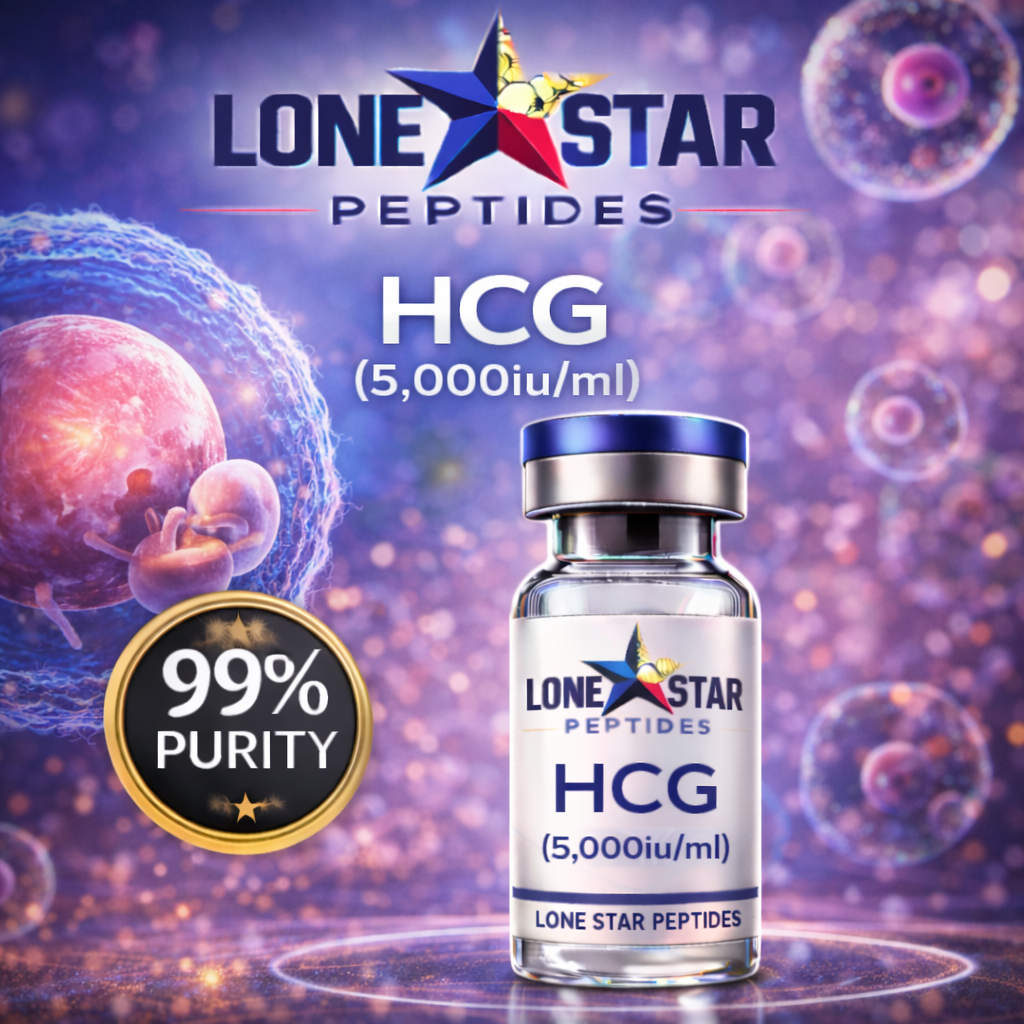
What is hCG?
Human chorionic gonadotropin (hCG) is a heterodimeric glycoprotein hormone produced by syncytiotrophoblast cells of the placenta. It shares the common alpha‑subunit with LH, FSH, and TSH and a unique beta‑subunit that confers receptor specificity. Physiologically it rescues the corpus luteum in early pregnancy; clinically it is used to trigger ovulation in IVF and to stimulate Leydig‑cell testosterone production in male hypogonadism research.
Mechanism of Action
- Full agonist at the LH/hCG receptor (LHCGR) on ovarian theca and granulosa‑lutein cells, and testicular Leydig cells
- In females: triggers final oocyte maturation, ovulation, and corpus‑luteum progesterone production
- In males: stimulates Leydig‑cell steroidogenesis (testosterone, estradiol)
- Recombinant (Ovidrel), urinary‑derived (Pregnyl, Novarel), and synthetic formulations exist
- Long plasma half‑life (~36 h) due to C‑terminal peptide extension on the β‑subunit
Compound Properties
- Structure: Heterodimeric glycoprotein (α‑subunit 92 aa + β‑subunit 145 aa)
- Molecular weight: ~37.5 kDa
- CAS: 9002‑61‑3
- Form: Liquid preparation
- Concentration: 5,000 IU/mL
- Source: Urinary‑derived or recombinant; biological activity calibrated against WHO International Standard
Research‑Reference Context
Published clinical literature on the hCG class:
- Ludwig et al., Fertility and Sterility: recombinant vs. urinary hCG in IVF.
- Coviello et al., JCEM (2005): hCG and spermatogenesis preservation in male hormonal‑contraception research.
- Liu et al., Lancet (2006): hCG and Leydig‑cell stimulation in hypogonadism research protocols.
- All clinical dosing is physician‑directed and not reproduced here.
Research Findings
- Reliable ovulatory trigger in IVF protocols
- Preserves intratesticular testosterone and spermatogenesis during HPG‑suppressing research protocols
- Distinct from LH in half‑life and glycosylation pattern
Known Adverse Events Reported in Clinical Literature
- Ovarian hyperstimulation syndrome (OHSS) — can be severe after IVF trigger
- Thromboembolic events (especially in OHSS context)
- Injection‑site reactions
- Gynecomastia with prolonged use in males (aromatization of induced testosterone)
- Headache, fatigue, mood changes
- Not to be used in pregnancy, sex‑hormone‑dependent cancers, or uncontrolled thyroid disease per standard prescribing information
Storage & Handling
- Lyophilized (unreconstituted) vials: store at −20°C long‑term; short‑term 2–8°C acceptable.
- After reconstitution with bacteriostatic or sterile water: store at 2–8°C; use within 14–28 days per standard peptide stability guidance.
- Protect from light, heat, and repeated freeze‑thaw cycles. Handle in a sterile laboratory environment.
Certificate of Analysis
A Certificate of Analysis (COA) confirming identity and purity by HPLC / MS is available upon request. Contact Lonestar Peptides for lot‑specific documentation.
Summaries reference peer‑reviewed preclinical and clinical literature available as of early 2025. Newer findings may not be reflected. Researchers should consult current literature and conduct their own due diligence. Lonestar Peptides makes no claim of therapeutic benefit.