

Description
What is Ibutamoren (MK‑677)?
Ibutamoren (development code MK‑677 or L‑163,191) is a small‑molecule, orally‑active ghrelin‑receptor agonist developed by Merck. Unlike peptide GH secretagogues it is absorbed from the GI tract and produces a sustained 24‑hour increase in GH pulse amplitude and IGF‑1 in clinical trials without suppressing endogenous pulsatility.
Mechanism of Action
- Non‑peptide agonist at the ghrelin receptor (GHS‑R1a)
- Increases mean 24‑h GH and IGF‑1 while preserving pulsatile GH architecture
- Crosses the blood‑brain barrier poorly; central ghrelin effects are limited compared with peripheral GH/IGF‑1 elevation
- Oral bioavailability and long plasma half‑life (~4–6 h) allow once‑daily dosing in studies
Compound Properties
- Molecular formula: C27H36N4O5S
- Molecular weight: ~528.66 g/mol
- CAS: 159752‑10‑0
- Structure: Spiro(indoline‑3,4’‑piperidine) scaffold (small molecule)
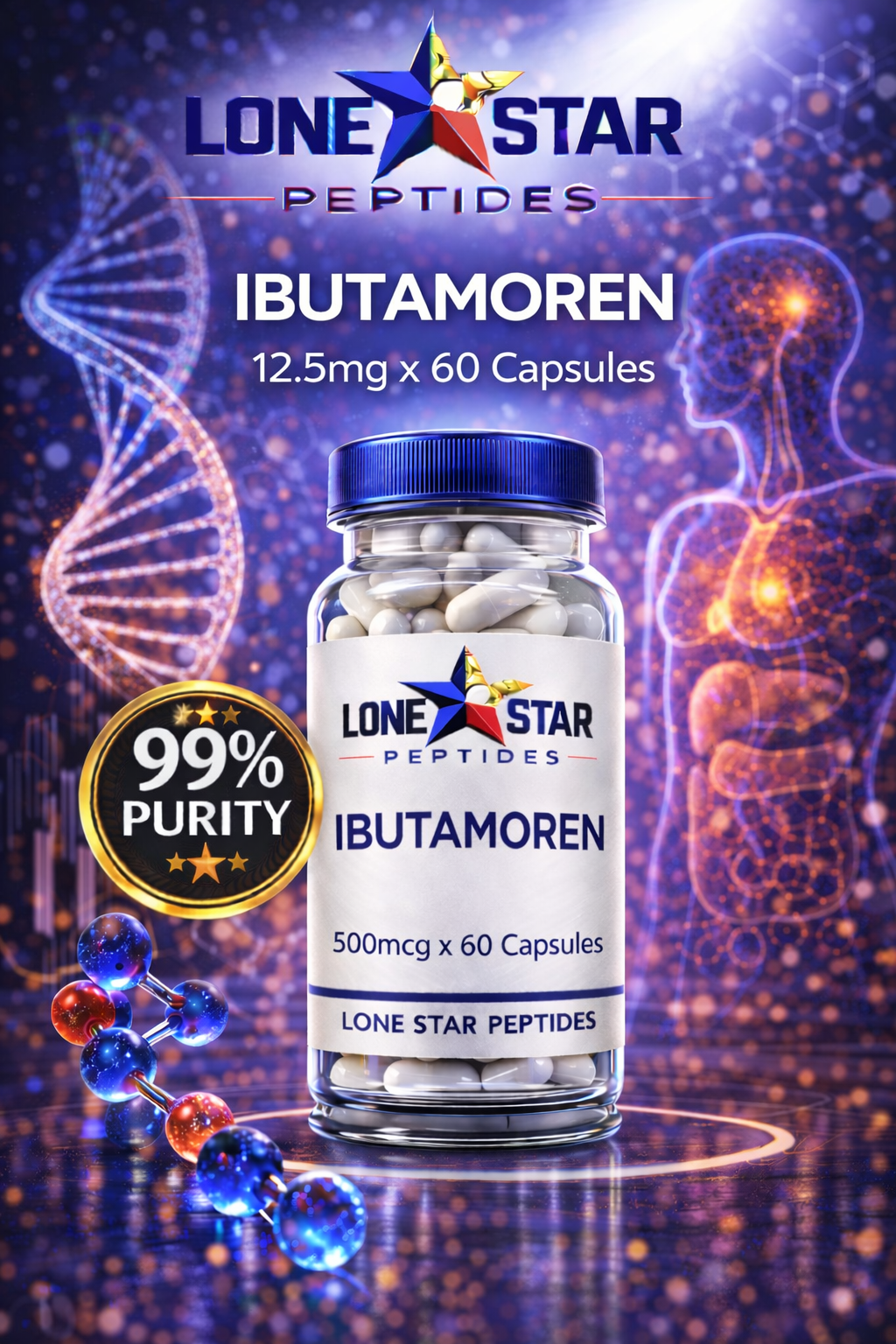
- Form: Oral capsule
- Unit size: 12.5 mg per capsule × 60 capsules
- Source: cGMP‑grade API, encapsulated; identity and purity by HPLC / MS
Research‑Reference Dosing
Published research‑reference ranges in clinical literature:
- Chapman et al., JCEM (1996): initial single‑dose PK/PD and GH/IGF‑1 response in healthy adults.
- Nass et al., Annals of Internal Medicine (2008): 12‑month study in healthy older adults (25 mg PO daily) — increased lean mass with raised fasting glucose and modest reductions in insulin sensitivity.
- Murphy et al., JCEM (1998): 2‑month daily oral dosing in obese men.
Research Findings
- Sustained elevation of 24‑h GH and IGF‑1 with oral administration (Chapman 1996)
- Increased fat‑free mass and appetite in healthy older adults over 12 months (Nass 2008)
- Investigated for fracture recovery, GHD, sarcopenia—development ultimately discontinued
Known Side Effects Reported in Research/Trials
- Increased appetite and water retention
- Elevated fasting glucose and decreased insulin sensitivity (notable in Nass 2008)
- Mild peripheral edema, muscle pain, fatigue
- Congestive heart failure signal in an elderly hip‑fracture trial led to halted development
- Not recommended for use in individuals with impaired glucose tolerance or cardiac compromise in any research model
Storage & Handling
- Lyophilized (unreconstituted) vials: store at −20°C long‑term; short‑term 2–8°C acceptable.
- After reconstitution with bacteriostatic or sterile water: store at 2–8°C; use within 14–28 days per standard peptide stability guidance.
- Protect from light, heat, and repeated freeze‑thaw cycles. Handle in a sterile laboratory environment.
Certificate of Analysis
A Certificate of Analysis (COA) confirming identity and purity by HPLC / MS is available upon request. Contact Lonestar Peptides for lot‑specific documentation.
Summaries reference peer‑reviewed preclinical and clinical literature available as of early 2025. Newer findings may not be reflected. Researchers should consult current literature and conduct their own due diligence. Lonestar Peptides makes no claim of therapeutic benefit.