

Description
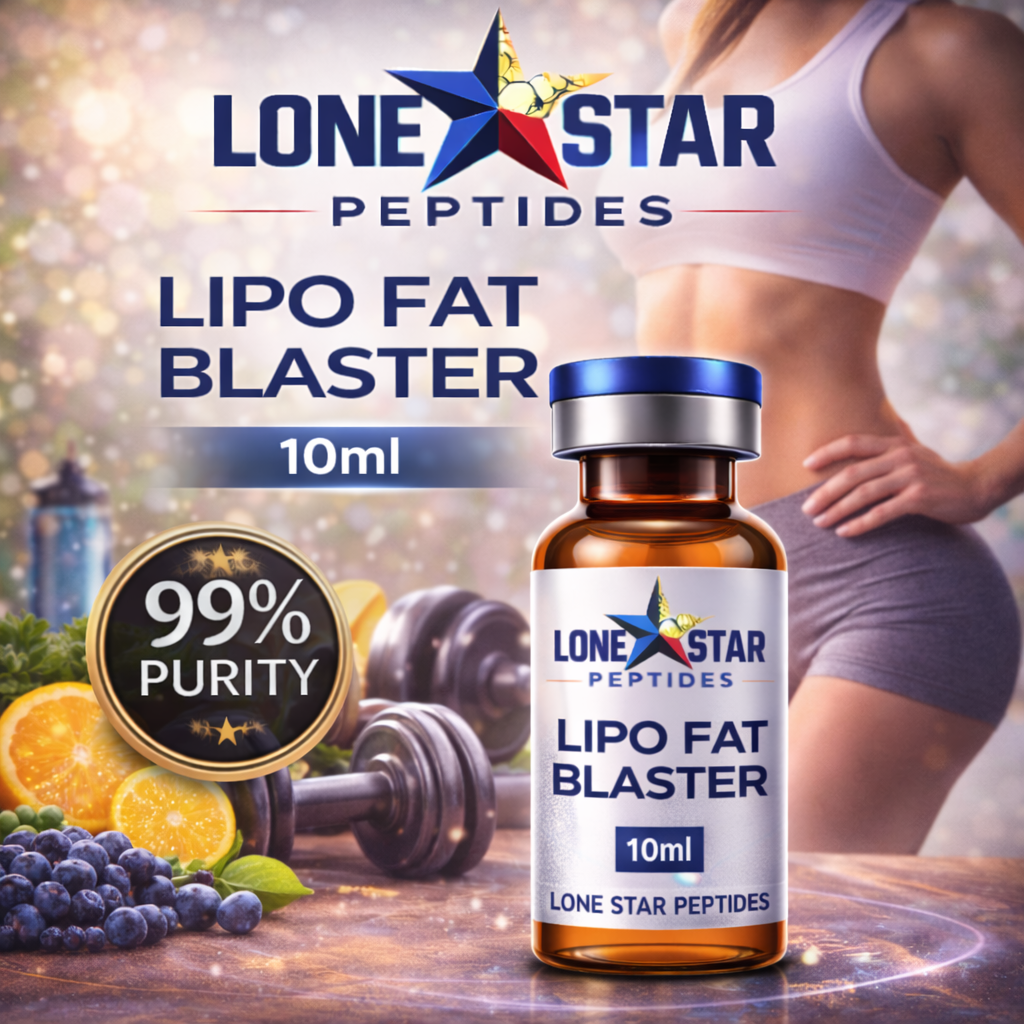
What is Lipo Fat Blaster?
Lipo Fat Blaster is a compound lipotropic preparation in the “MICC” class (Methionine, Inositol, Choline, Carnitine). These injectable nutrient blends are a staple of weight‑loss and aesthetic‑clinic research, intended as adjuncts to dietary and exercise protocols. Each constituent has independent metabolic actions related to lipid transport, methylation, and fatty‑acid oxidation.
Typical Constituents & Mechanism
- Methionine: essential sulfur amino acid; methyl‑donor via S‑adenosylmethionine (SAM) for lipid methylation and phosphatidylcholine synthesis
- Inositol: sugar alcohol involved in PI3K/Akt insulin signaling and intracellular second‑messenger pathways
- Choline: essential nutrient; precursor to phosphatidylcholine and acetylcholine; required for hepatic VLDL export (choline deficiency causes hepatic steatosis)
- L‑Carnitine: transports long‑chain fatty acids into mitochondria for β‑oxidation
- Supporting B‑vitamins (commonly B1, B6, B12) support one‑carbon metabolism and energy pathways
Preparation Details
- Volume: 10 mL multi‑dose vial
- Form: Liquid preparation
- Composition: Please refer to lot‑specific Certificate of Analysis for exact ingredient list and concentrations
Research‑Reference Context
Published literature on the MICC class:
- MICC injections are a long‑standing fixture of aesthetic/weight‑loss practice, but large, well‑controlled randomized trials demonstrating weight‑loss efficacy beyond diet/exercise alone are scarce.
- Individual components have substantial independent literature: choline deficiency and hepatic steatosis (Zeisel, Annual Review of Nutrition 2006); inositol in PCOS metabolic research (Unfer et al., Endocrine Connections 2017); L‑carnitine in fatty‑acid oxidation and limited roles in cardiovascular and diabetic research (DiNicolantonio, Mayo Clin Proc 2013).
- Rigorous randomized controlled trial evidence that MICC injections accelerate fat loss independent of caloric restriction is limited.
Known Side Effects Reported in Clinical Literature
- Injection‑site pain, stinging, erythema, bruising
- Sulfurous body odor or taste (from methionine metabolism)
- Flushing, transient GI upset, nausea
- Rare hypersensitivity reactions
- Contraindicated in severe hepatic or renal impairment per standard practice
Storage & Handling
- Lyophilized (unreconstituted) vials: store at −20°C long‑term; short‑term 2–8°C acceptable.
- After reconstitution with bacteriostatic or sterile water: store at 2–8°C; use within 14–28 days per standard peptide stability guidance.
- Protect from light, heat, and repeated freeze‑thaw cycles. Handle in a sterile laboratory environment.
Certificate of Analysis
A Certificate of Analysis (COA) confirming identity and purity by HPLC / MS is available upon request. Contact Lonestar Peptides for lot‑specific documentation.
Summaries reference peer‑reviewed preclinical and clinical literature available as of early 2025. Newer findings may not be reflected. Researchers should consult current literature and conduct their own due diligence. Lonestar Peptides makes no claim of therapeutic benefit.