

Description
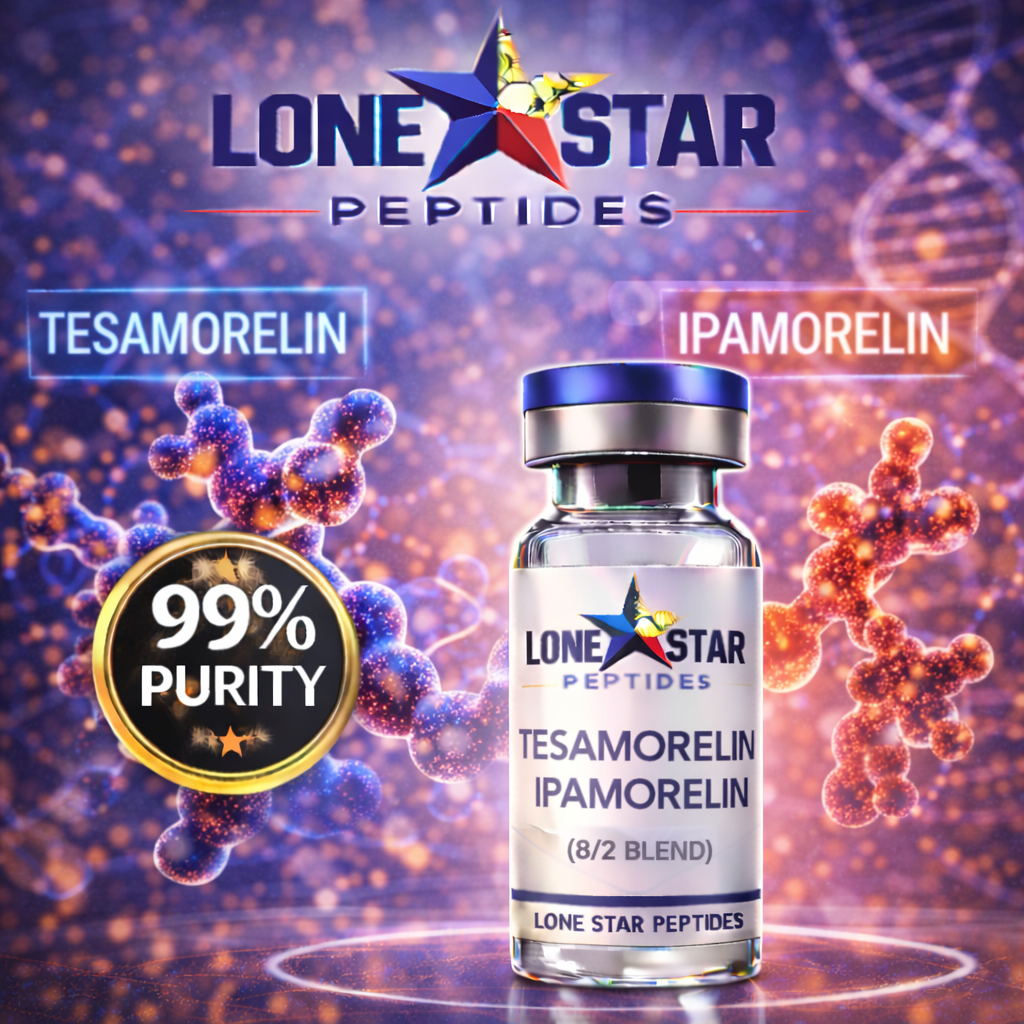
What is the Tesamorelin + Ipamorelin (8/2) Blend?
This co‑lyophilized research blend pairs Tesamorelin (8 mg, a stabilized GHRH(1–44) analog) with Ipamorelin (2 mg, a selective pentapeptide ghrelin‑receptor agonist) in a single vial. The paired GHRH‑plus‑GHS approach is one of the most commonly studied protocols in preclinical GH‑release research because the two classes act on distinct receptors and produce synergistic (supra‑additive) GH pulses when co‑administered.
Mechanism of Action — Combined
- Tesamorelin: GHRH‑receptor (GHRHR) agonist with a hexenoic‑acid N‑terminal modification that resists DPP‑IV cleavage, producing sustained GHRH‑receptor activation
- Ipamorelin: Selective GHS‑R1a agonist producing pulsatile GH release without significant cortisol, ACTH, or prolactin elevation
- Synergy: GHRH‑receptor and ghrelin‑receptor activation amplify somatotroph GH release via convergent but mechanistically distinct intracellular pathways (cAMP/PKA from GHRH; PLC/DAG from ghrelin receptor)
Compound Properties
- Composition: Tesamorelin 8 mg + Ipamorelin 2 mg per vial
- Form: Lyophilized powder (co‑lyophilized blend)
- Source: Each peptide individually ≥98% by HPLC prior to blending
Research‑Reference Dosing
Published research‑reference ranges (for each constituent; no published blend‑specific pharmacology):
- Grunfeld et al., JCEM (2007): Tesamorelin pivotal trial in HIV‑associated lipodystrophy.
- Raun et al., European Journal of Endocrinology (1998); Gobburu, JCP (1999): Ipamorelin characterization.
- Bowers et al., Endocrinology (various): foundational GHRH/GHS synergy literature.
- No peer‑reviewed clinical trials of this specific 8/2 blend as a combined formulation.
Research Findings
- Tesamorelin alone reduces visceral adipose in HIV lipodystrophy (Grunfeld 2007); IGF‑1 rises in responsive subjects
- Ipamorelin produces pulsatile GH without cortisol/prolactin elevation (Raun 1998)
- GHRH + GHS combinations produce larger GH pulses than either class alone in preclinical models
Known Side Effects Reported in Research/Trials
- Injection‑site reactions (most common)
- Transient flushing, headache, dysgeusia
- Elevated IGF‑1 with sustained dosing; monitor in any research protocol
- Glucose intolerance reported with chronic tesamorelin exposure (class effect of GH/IGF‑1 elevation)
- Fluid retention, arthralgia, paresthesias with sustained GH elevation
Storage & Handling
- Lyophilized (unreconstituted) vials: store at −20°C long‑term; short‑term 2–8°C acceptable.
- After reconstitution with bacteriostatic or sterile water: store at 2–8°C; use within 14–28 days per standard peptide stability guidance.
- Protect from light, heat, and repeated freeze‑thaw cycles. Handle in a sterile laboratory environment.
Certificate of Analysis
A Certificate of Analysis (COA) confirming identity and purity by HPLC / MS is available upon request. Contact Lonestar Peptides for lot‑specific documentation.
Summaries reference peer‑reviewed preclinical and clinical literature available as of early 2025. Newer findings may not be reflected. Researchers should consult current literature and conduct their own due diligence. Lonestar Peptides makes no claim of therapeutic benefit.