

Description
What is Cerebrolysin?
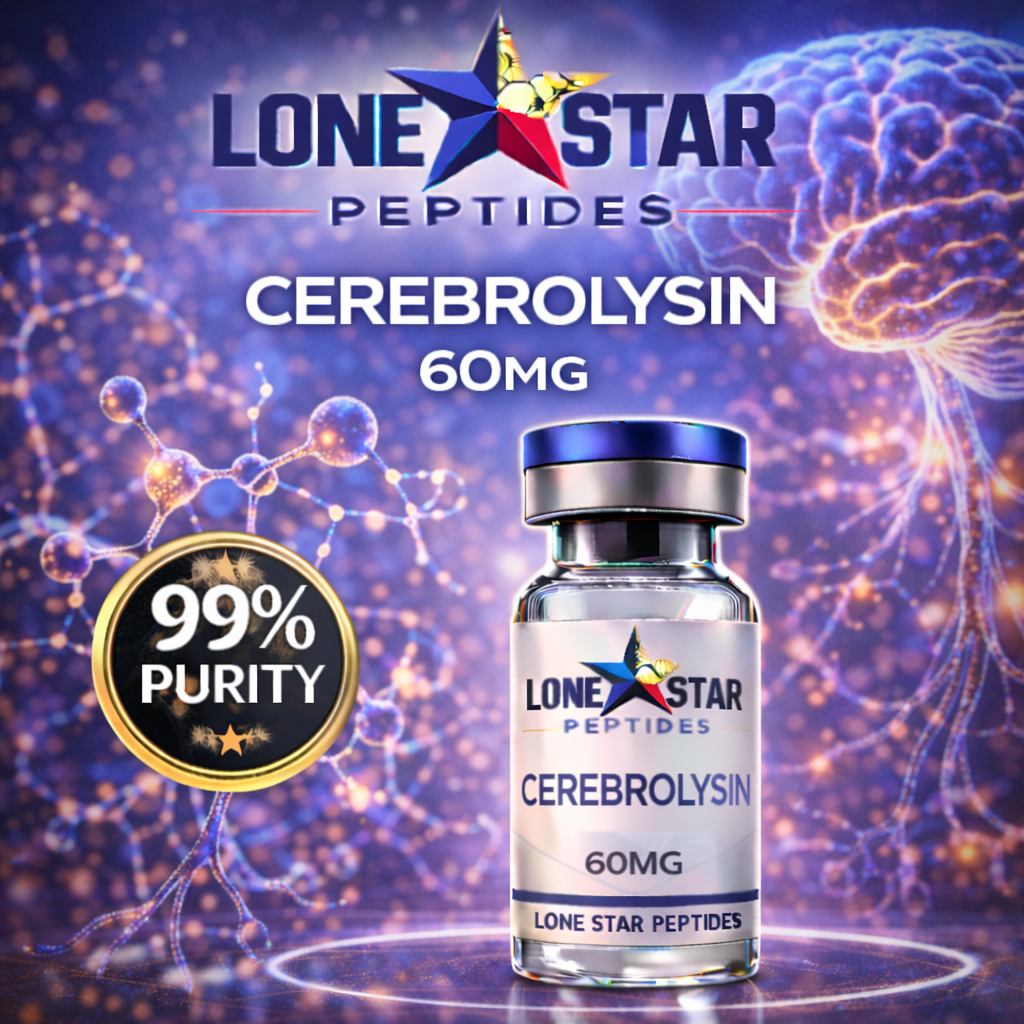
Cerebrolysin is not a single peptide but a standardized biological preparation derived from enzymatically processed porcine brain tissue. It contains a mixture of low‑molecular‑weight neuropeptides (≤10 kDa) and free amino acids designed to mimic endogenous neurotrophic factor activity. It has been marketed by Ever Neuro Pharma (EVER Pharma) for decades in Europe, Russia, and Asia, and has an unusually deep clinical trial record for a CNS peptide preparation.
Mechanism of Action
- Mimics brain‑derived neurotrophic factor (BDNF), nerve growth factor (NGF), and glial‑derived neurotrophic factor (GDNF) activity in preclinical assays
- Reduces glutamate excitotoxicity and improves neuronal survival in ischemia models
- Modulates microglial activation and neuroinflammation after CNS injury
- Supports synaptogenesis and dendritic remodeling in preclinical dementia models
Compound Properties
- Composition: Standardized mixture of porcine‑brain‑derived peptides ≤10 kDa plus free amino acids
- Active content: ~25% peptide, ~75% free amino acids by weight (per manufacturer spec)
- Form: Lyophilized powder (or liquid in commercial vials)
- Unit size: 60 mg / vial (research presentation)
- Source: Porcine brain hydrolysate; research‑grade
Research‑Reference Dosing
Published research‑reference ranges from clinical trials of the commercial Cerebrolysin product:
- Heiss et al., Stroke (2012) — CARS (Cerebrolysin and Recovery After Stroke): IV infusion protocols in acute ischemic stroke.
- Alvarez et al., Journal of the Neurological Sciences (2011): Cerebrolysin in vascular and Alzheimer dementia cohorts.
- Muresanu et al., Stroke (2016): CAPTAIN trial in moderate‑severe traumatic brain injury.
- Clinical dosing uses IV infusion of commercial preparation; direct translation to powdered research material is not validated.
Research Findings
- Functional improvement in ischemic stroke recovery (Heiss 2012)
- Cognitive stabilization in vascular and Alzheimer dementia (Alvarez 2011)
- Improved early Glasgow Outcome scale scores in TBI (Muresanu 2016)
- Evidence quality is heterogeneous; meta‑analyses report modest effect sizes
Known Side Effects Reported in Research/Trials
- Injection‑site warmth or burning
- Rare hypersensitivity or allergic reactions (porcine‑derived material)
- Transient hyperventilation, dizziness, or sweating with rapid infusion
- Rare reports of seizure in predisposed patients with rapid IV administration
- Not recommended in severe renal impairment or status epilepticus per product labeling
Storage & Handling
- Lyophilized (unreconstituted) vials: store at −20°C long‑term; short‑term 2–8°C acceptable.
- After reconstitution with bacteriostatic or sterile water: store at 2–8°C; use within 14–28 days per standard peptide stability guidance.
- Protect from light, heat, and repeated freeze‑thaw cycles. Handle in a sterile laboratory environment.
Certificate of Analysis
A Certificate of Analysis (COA) confirming identity and purity by HPLC / MS is available upon request. Contact Lonestar Peptides for lot‑specific documentation.
Summaries reference peer‑reviewed preclinical and clinical literature available as of early 2025. Newer findings may not be reflected. Researchers should consult current literature and conduct their own due diligence. Lonestar Peptides makes no claim of therapeutic benefit.