

Description
Nasal Spray Format
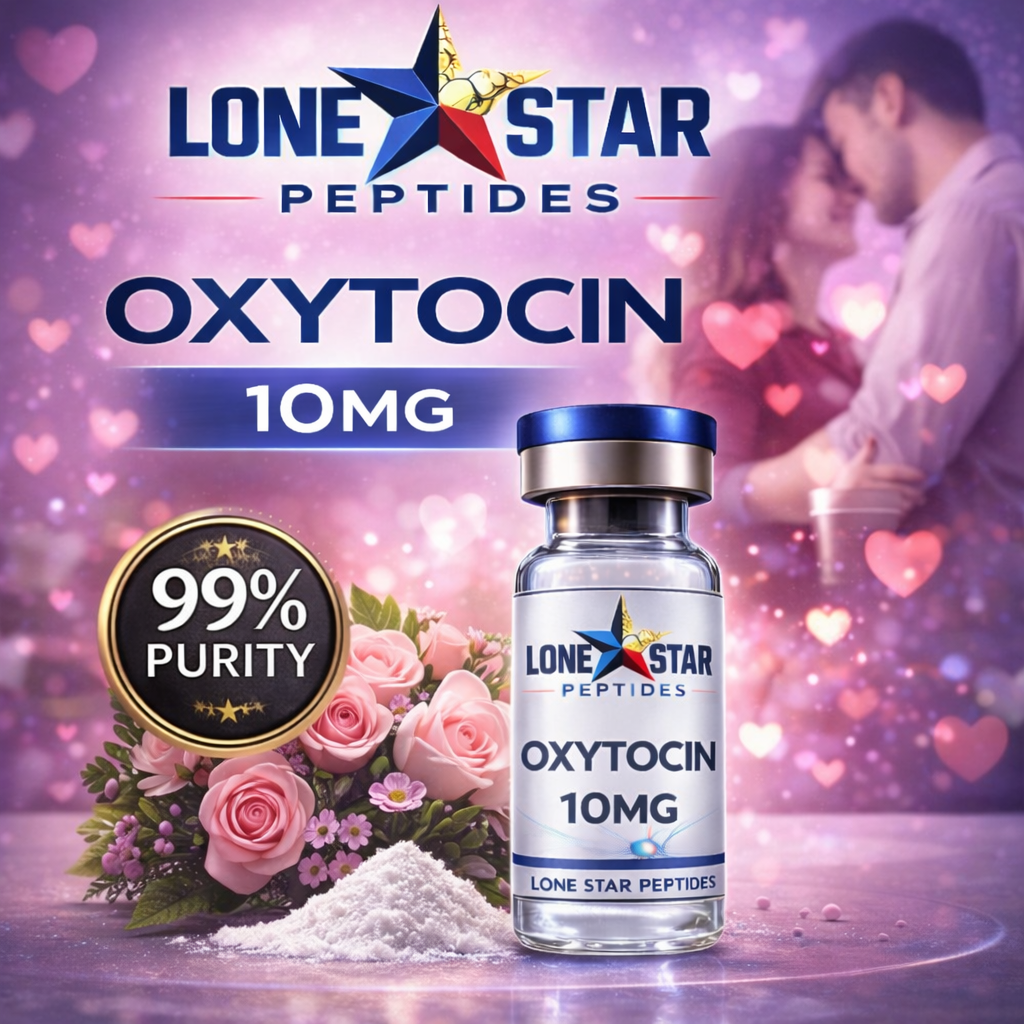
This product is a liquid research preparation at a concentration of 1 mg/mL (10 mg total peptide in 10 mL), supplied with a metered nasal‑spray pump for research applications where intranasal administration is the study route. The intranasal route offers partial access to CNS tissue via the olfactory and trigeminal pathways, bypassing first‑pass hepatic metabolism.
Intranasal pharmacology varies substantially by molecule. Small, lipophilic peptides may achieve meaningful CNS concentrations; larger or highly hydrophilic peptides often do not. Peer‑reviewed data for intranasal PK is referenced below where available.
Parent Compound: Oxytocin
Oxytocin is an endogenous 9‑residue cyclic neuropeptide from the posterior pituitary, acting at the oxytocin receptor (OXTR). Peripheral roles include uterine contraction and lactation; central roles include modulation of social salience, amygdala reactivity, and HPA axis tone.
Intranasal Research Context
- Kosfeld et al., Nature (2005): 24 IU intranasal — foundational “oxytocin and trust” paper.
- Guastella et al., Biological Psychiatry (2010): intranasal oxytocin and facial‑emotion recognition.
- Leng & Ludwig, Journal of Neuroendocrinology (2016): critical review questioning the magnitude of CNS access via intranasal delivery.
- Parker et al., PNAS (2017): mixed/negative results for intranasal oxytocin in autism Phase 2.
Preparation Details
- Total peptide: 10 mg oxytocin
- Volume: 10 mL
- Concentration: 1 mg/mL
- Format: Metered nasal‑spray pump
- Source: Solid‑phase synthesis; ≥98% HPLC, reconstituted in preservative‑containing sterile saline buffer
Known Side Effects — Intranasal Route
- Rhinorrhea, nasal irritation, mild headache
- Mild GI symptoms
- Transient flushing
- Long‑term CNS safety of chronic intranasal dosing is not well characterized
Storage & Handling
- Lyophilized (unreconstituted) vials: store at −20°C long‑term; short‑term 2–8°C acceptable.
- After reconstitution with bacteriostatic or sterile water: store at 2–8°C; use within 14–28 days per standard peptide stability guidance.
- Protect from light, heat, and repeated freeze‑thaw cycles. Handle in a sterile laboratory environment.
Certificate of Analysis
A Certificate of Analysis (COA) confirming identity and purity by HPLC / MS is available upon request. Contact Lonestar Peptides for lot‑specific documentation.
Summaries reference peer‑reviewed preclinical and clinical literature available as of early 2025. Newer findings may not be reflected. Researchers should consult current literature and conduct their own due diligence. Lonestar Peptides makes no claim of therapeutic benefit.