

Description
Nasal Spray Format
This product is a liquid research preparation at a concentration of 1 mg/mL (10 mg total peptide in 10 mL), supplied with a metered nasal‑spray pump for research applications where intranasal administration is the study route. The intranasal route offers partial access to CNS tissue via the olfactory and trigeminal pathways, bypassing first‑pass hepatic metabolism.
Intranasal pharmacology varies substantially by molecule. Small, lipophilic peptides may achieve meaningful CNS concentrations; larger or highly hydrophilic peptides often do not. Peer‑reviewed data for intranasal PK is referenced below where available.
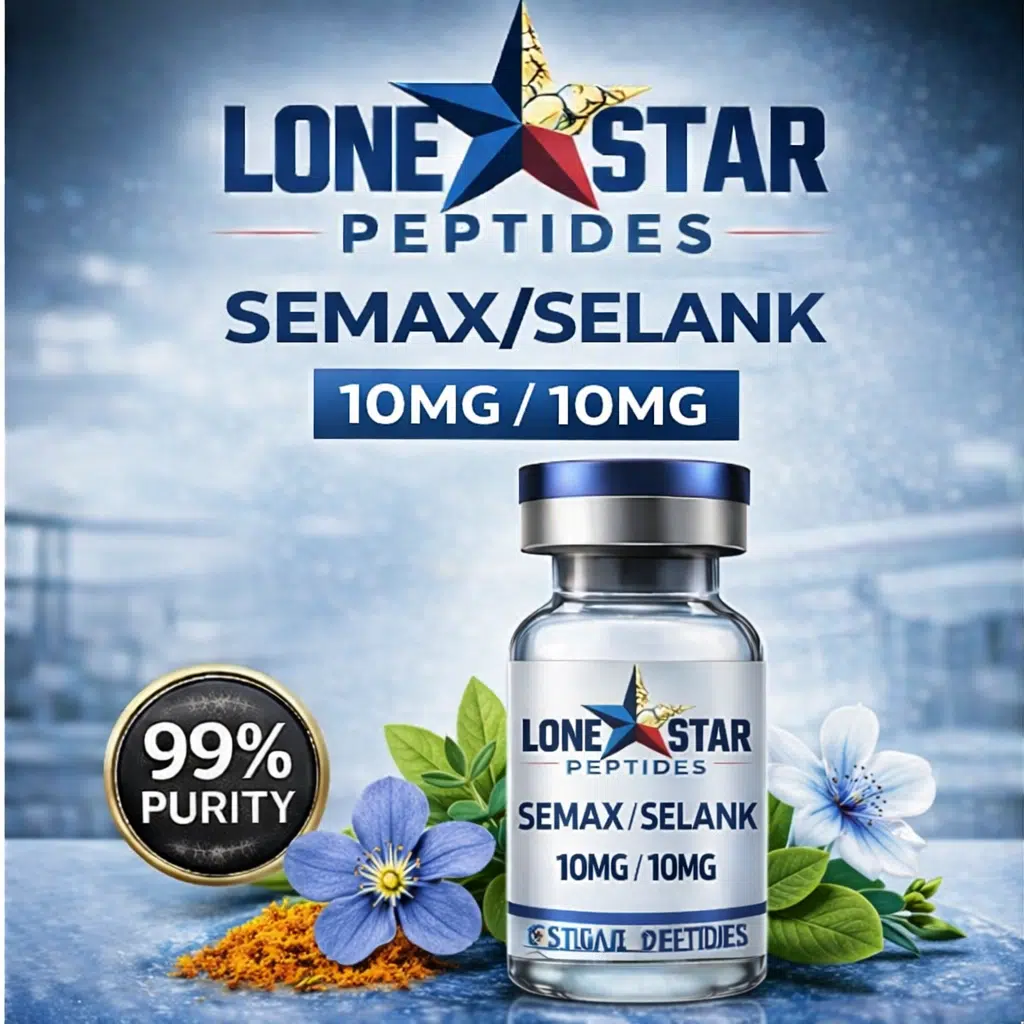
Combined Preparation: Semax + Selank
This nasal spray combines two well‑characterized Russian heptapeptides: Semax (MEHFPGP, an ACTH(4–10) analog with nootropic/neuroprotective activity) and Selank (TKPRPGP, a tuftsin analog with anxiolytic/immunomodulatory activity). Both are registered in Russia for clinical intranasal use, and both were developed at the same Russian Academy of Sciences institute.
Mechanism of Action — Combined
- Semax: BDNF/NGF modulation; neuroprotection; melanocortin‑receptor‑independent activity
- Selank: GABAergic/serotonergic modulation without benzodiazepine binding; immunomodulatory tuftsin-derived activity
- Rationale for combination: complementary — nootropic/cognitive vs. anxiolytic/stress profiles without overlapping side effects
Intranasal Research Context
- Individual Semax and Selank published literature (cited on respective product pages)
- No published peer‑reviewed head‑to‑head combined‑formulation pharmacology
- Combined use is a common research protocol but not independently validated
Preparation Details
- Composition: Semax 10 mg + Selank 10 mg
- Volume: 10 mL
- Concentration: 1 mg/mL each peptide
- Format: Metered nasal‑spray pump
- Source: Solid‑phase synthesis; each peptide ≥98% HPLC prior to blending
Known Side Effects — Intranasal Route
- Nasal irritation, rhinorrhea, rare epistaxis
- Transient headache, mild sleep changes
- No characteristic combined‑formulation adverse event pattern
Storage & Handling
- Lyophilized (unreconstituted) vials: store at −20°C long‑term; short‑term 2–8°C acceptable.
- After reconstitution with bacteriostatic or sterile water: store at 2–8°C; use within 14–28 days per standard peptide stability guidance.
- Protect from light, heat, and repeated freeze‑thaw cycles. Handle in a sterile laboratory environment.
Certificate of Analysis
A Certificate of Analysis (COA) confirming identity and purity by HPLC / MS is available upon request. Contact Lonestar Peptides for lot‑specific documentation.
Summaries reference peer‑reviewed preclinical and clinical literature available as of early 2025. Newer findings may not be reflected. Researchers should consult current literature and conduct their own due diligence. Lonestar Peptides makes no claim of therapeutic benefit.