


Description
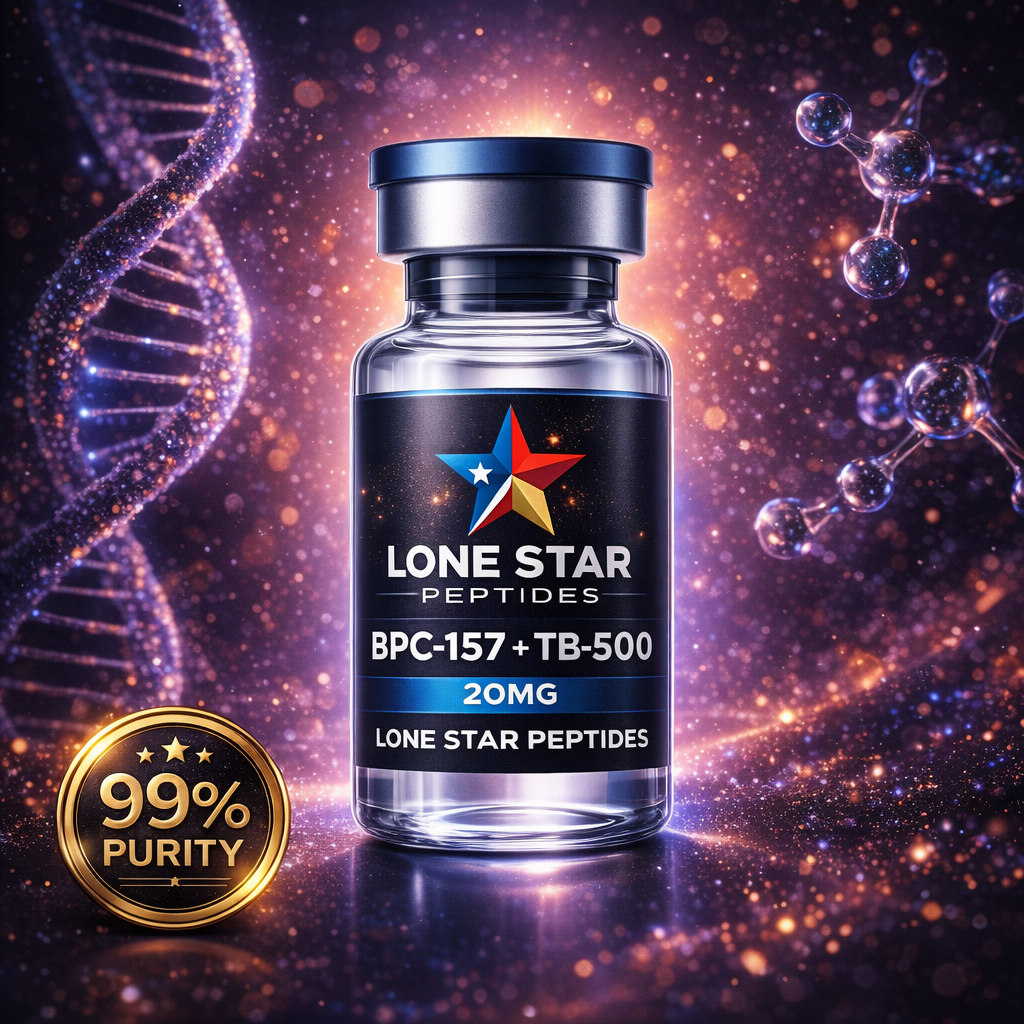
What is BPC‑157 + TB‑500 (20 mg Blend)?
This research blend pairs two peptides commonly studied together in preclinical tendon, ligament, muscle, and gut‑repair models: BPC‑157 (a 15‑amino‑acid partial sequence derived from a gastric protective protein) and TB‑500 (a synthetic 17‑aa fragment of Thymosin β4 containing the actin‑binding LKKTETQ motif). The blend is formulated 10 mg + 10 mg in a single vial for convenience in paired‑peptide research protocols.
Mechanism of Action — Combined
- BPC‑157: Upregulates VEGF‑R2 and eNOS, accelerates angiogenesis in granulation tissue, modulates nitric oxide pathway, and has shown protective effects in rodent gut‑lesion models.
- TB‑500: Sequesters G‑actin, upregulates cell migration, angiogenesis, and laminin‑5; used in cardiac and dermal repair research.
- Rationale for combination: complementary mechanisms—BPC‑157 acts on vascular/gut barrier signaling while TB‑500 drives cytoskeletal remodeling and cell migration.
Compound Properties
- Composition: BPC‑157 10 mg + TB‑500 (17‑aa fragment) 10 mg
- Form: Lyophilized powder (co‑lyophilized blend)
- Unit size: 20 mg total / vial
- Source: Solid‑phase peptide synthesis; each peptide individually ≥98% by HPLC prior to blending
Research‑Reference Dosing
Published research‑reference ranges (for each constituent; no published head‑to‑head blend pharmacology):
- Sikiric et al., Current Pharmaceutical Design (2010); Journal of Physiology – Paris (2010): BPC‑157 in gut and musculoskeletal rodent models.
- Malinda et al., Journal of Investigative Dermatology (1999); Bock‑Marquette, Nature (2004): Tβ4 / TB‑500 in wound and cardiac repair.
- No published clinical trial data exists for this specific 1:1 blend; dosing in research is typically extrapolated from each constituent’s individual preclinical ranges.
Research Findings
- BPC‑157: accelerated tendon‑to‑bone healing, gastric ulcer protection, and improved outcomes in transected‑muscle rodent models (Sikiric 2010)
- TB‑500: angiogenesis, reduced inflammation, and improved post‑infarct cardiac function in mice (Bock‑Marquette 2004)
- Combined use is a popular preclinical research protocol despite the absence of formal blend‑specific pharmacology
Known Side Effects Reported in Research/Trials
- Injection‑site redness or irritation
- Fatigue or lightheadedness reported anecdotally
- Theoretical pro‑angiogenic caution in the presence of occult neoplasia (TB‑500 mechanism)
- Long‑term human safety data unavailable for either constituent
Storage & Handling
- Lyophilized (unreconstituted) vials: store at −20°C long‑term; short‑term 2–8°C acceptable.
- After reconstitution with bacteriostatic or sterile water: store at 2–8°C; use within 14–28 days per standard peptide stability guidance.
- Protect from light, heat, and repeated freeze‑thaw cycles. Handle in a sterile laboratory environment.
Certificate of Analysis
A Certificate of Analysis (COA) confirming identity and purity by HPLC / MS is available upon request. Contact Lonestar Peptides for lot‑specific documentation.
Summaries reference peer‑reviewed preclinical and clinical literature available as of early 2025. Newer findings may not be reflected. Researchers should consult current literature and conduct their own due diligence. Lonestar Peptides makes no claim of therapeutic benefit.


Reviews
There are no reviews yet.