


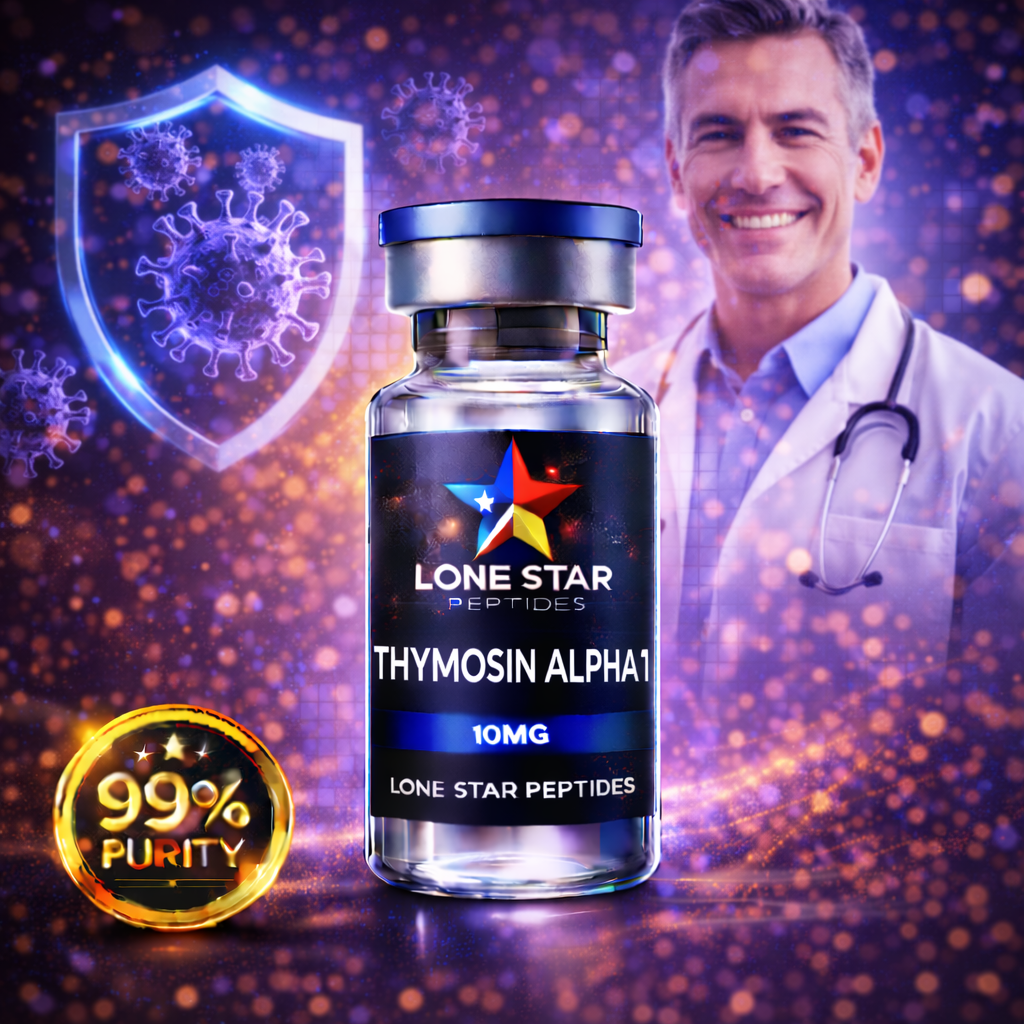
Description
What is Thymosin Alpha 1?
Thymosin alpha‑1 (Tα1) is a 28‑amino‑acid acetylated peptide originally isolated from bovine thymus by Allan Goldstein’s group in the 1970s. Unlike Thymosin β4 (a cytoskeletal peptide), Tα1 is a secreted immunomodulator produced from enzymatic cleavage of prothymosin‑α. It is marketed internationally under the brand name Zadaxin® (SciClone/ImmunoSciences) and has a substantial clinical trial record in infectious disease and oncology.
Mechanism of Action
- TLR9 and TLR2 agonist activity on dendritic cells and macrophages
- Promotes Th1 differentiation, increases IL‑2 and IFN‑γ production, and enhances cytotoxic T‑cell activity
- Restores NK‑cell and T‑cell function in immunosuppressed states
- Reduces immune exhaustion markers in chronic viral infection models
Compound Properties
- Molecular formula: C129H215N33O55
- Molecular weight: ~3108.4 g/mol
- CAS: 62304‑98‑7
- Sequence: Ac‑SDAAVDTSSEITTKDLKEKKEVVEEAEN‑OH (28 residues, N‑terminal acetylated)
- Form: Lyophilized powder
- Unit size: 10 mg / vial
- Source: Solid‑phase peptide synthesis; ≥98% purity by HPLC
Research‑Reference Dosing
Published research‑reference ranges from clinical trials of the commercial product:
- Andreone et al., Journal of Viral Hepatitis (2001): Tα1 monotherapy and combination with interferon in chronic hepatitis C.
- Chan et al., Antiviral Therapy (2007): Tα1 in chronic hepatitis B.
- Garaci et al., International Immunology (2012): Tα1 in oncology combination therapy.
- Matteucci et al., Scientific Reports (2017): Tα1 in severe COVID‑19 (later work extending to pandemic setting).
Research Findings
- Sustained virologic response improvements in combination therapy for chronic HCV (Andreone 2001)
- HBeAg seroconversion improvement in chronic HBV (Chan 2007)
- Restored lymphocyte counts and reduced mortality signals in severe COVID‑19 cohort studies (Matteucci 2017, later work)
- Investigated as adjunct to chemotherapy, vaccine adjuvant, and sepsis therapy
Known Side Effects Reported in Research/Trials
- Generally very well tolerated across large clinical datasets
- Mild injection‑site erythema or discomfort
- Transient malaise or low‑grade fatigue
- Rare hypersensitivity reactions
- Theoretical caution in autoimmune disease (immune‑potentiating mechanism)
Storage & Handling
- Lyophilized (unreconstituted) vials: store at −20°C long‑term; short‑term 2–8°C acceptable.
- After reconstitution with bacteriostatic or sterile water: store at 2–8°C; use within 14–28 days per standard peptide stability guidance.
- Protect from light, heat, and repeated freeze‑thaw cycles. Handle in a sterile laboratory environment.
Certificate of Analysis
A Certificate of Analysis (COA) confirming identity and purity by HPLC / MS is available upon request. Contact Lonestar Peptides for lot‑specific documentation.
Summaries reference peer‑reviewed preclinical and clinical literature available as of early 2025. Newer findings may not be reflected. Researchers should consult current literature and conduct their own due diligence. Lonestar Peptides makes no claim of therapeutic benefit.

Reviews
There are no reviews yet.