


Description
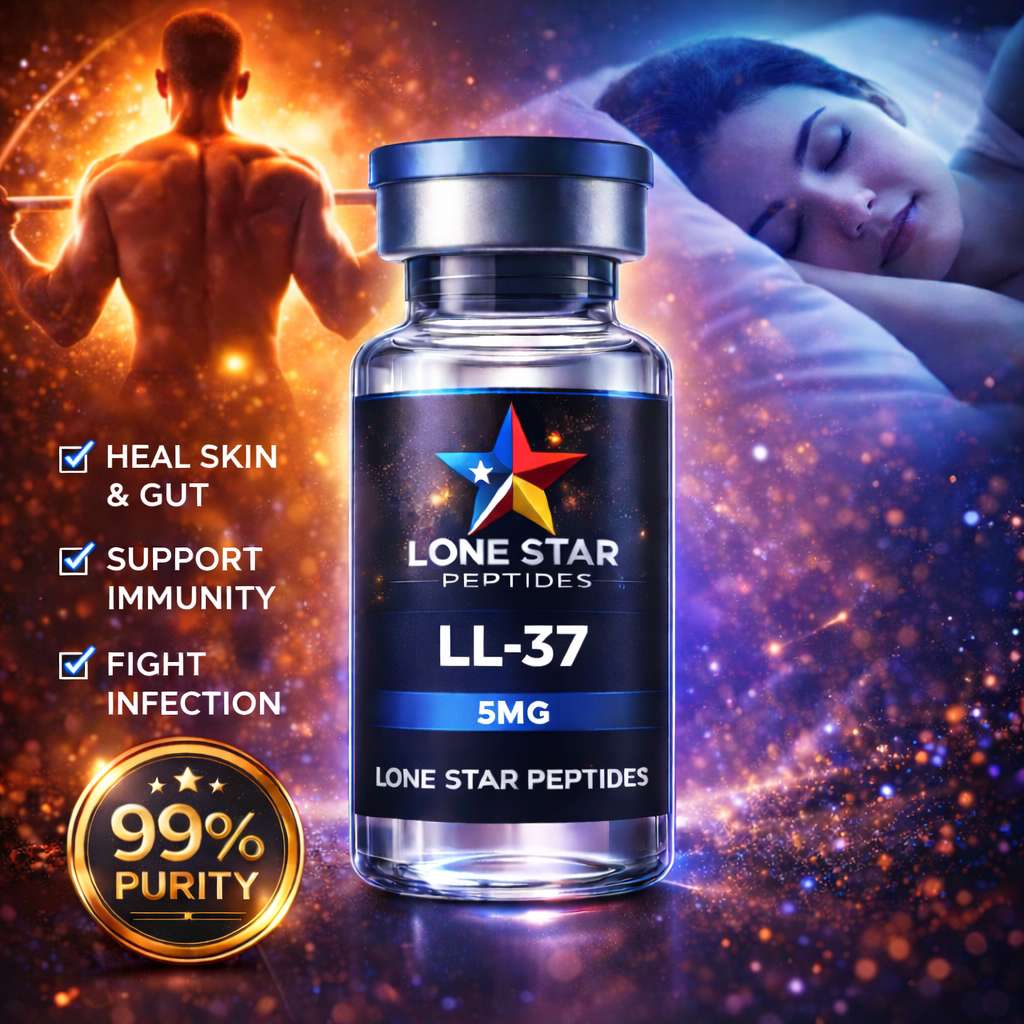
What is LL‑37?
LL‑37 is the C‑terminal 37‑residue antimicrobial fragment released from the human cathelicidin hCAP‑18 precursor by neutrophil protease cleavage. It is the only cathelicidin expressed in humans and is found in neutrophils, epithelial cells, and keratinocytes. Beyond its bactericidal activity, LL‑37 functions as a multi‑faceted host‑defense modulator affecting wound healing, chemotaxis, angiogenesis, and adaptive immunity.
Mechanism of Action
- Direct bactericidal activity via membrane disruption (cationic amphipathic α‑helix)
- Broad‑spectrum activity against Gram‑positive, Gram‑negative bacteria, some fungi, and enveloped viruses
- Chemotactic for neutrophils, monocytes, and mast cells via FPRL1 receptor
- Binds and neutralizes LPS, reducing endotoxin‑driven inflammation
- Promotes keratinocyte migration and angiogenesis in wound‑healing models
- Activates P2X7 receptor; at high concentrations can be pro‑inflammatory
Compound Properties
- Molecular formula: C205H340N60O53
- Molecular weight: ~4493.3 g/mol
- CAS: 154947‑66‑7
- Sequence: LLGDFFRKSKEKIGKEFKRIVQRIKDFLRNLVPRTES
- Form: Lyophilized powder
- Unit size: 5 mg / vial
- Source: Solid‑phase peptide synthesis; ≥95% purity by HPLC
Research‑Reference Dosing
Published research‑reference ranges in preclinical literature:
- Grönberg et al., Wound Repair and Regeneration (2014): LL‑37 topical in chronic venous leg ulcers (Phase IIa, ~35 patients).
- Mookherjee et al., Journal of Immunology (2006): immunomodulatory profiling.
- Dürr et al., Biochim Biophys Acta (2006): membrane biophysics and antibacterial mechanism.
- Systemic human efficacy data is very limited; most human data involves topical wound application.
Research Findings
- Accelerated wound closure in chronic leg ulcers with topical LL‑37 (Grönberg 2014)
- Broad antimicrobial activity in vitro against MRSA, E. coli, biofilm organisms
- Endotoxin neutralization and immunomodulation in sepsis models
Known Side Effects Reported in Research/Trials
- Injection‑site reactions (parenteral)
- At higher concentrations, LL‑37 can become pro‑inflammatory via P2X7/mast‑cell activation
- Implicated in rosacea and psoriasis pathophysiology at dysregulated physiologic concentrations
- Systemic human safety data is limited; cytotoxicity to host cells at high concentrations is documented in vitro
Storage & Handling
- Lyophilized (unreconstituted) vials: store at −20°C long‑term; short‑term 2–8°C acceptable.
- After reconstitution with bacteriostatic or sterile water: store at 2–8°C; use within 14–28 days per standard peptide stability guidance.
- Protect from light, heat, and repeated freeze‑thaw cycles. Handle in a sterile laboratory environment.
Certificate of Analysis
A Certificate of Analysis (COA) confirming identity and purity by HPLC / MS is available upon request. Contact Lonestar Peptides for lot‑specific documentation.
Summaries reference peer‑reviewed preclinical and clinical literature available as of early 2025. Newer findings may not be reflected. Researchers should consult current literature and conduct their own due diligence. Lonestar Peptides makes no claim of therapeutic benefit.


Reviews
There are no reviews yet.